


Can a special ball mill be used for continuous production? That's a question I get asked a lot as a supplier of special ball mills. In this blog, I'm gonna break down the ins and outs of using special ball mills for continuous production, sharing my real - world knowledge and experiences.
First off, let's talk about what special ball mills are. Special ball mills come in different types, each with its own unique features and functions. For example, the Semi Autogenous Grinding Mill is a beast. It uses large rocks as part of the grinding media, which can save on the cost of traditional grinding balls. Then there's the High Energy Ball Milling, which operates at a much higher speed and energy level compared to regular ball mills. This allows for faster and more efficient grinding, making it ideal for materials that are difficult to break down. And the Sag Ball Mill, short for Semi - Autogenous Grinding Ball Mill, combines the features of semi - autogenous grinding and traditional ball milling, providing a balanced approach to grinding.
Now, onto the big question: can they be used for continuous production? The answer is a resounding yes, but with some caveats.
One of the main advantages of using special ball mills for continuous production is efficiency. These mills are designed to handle large volumes of material, and when set up correctly, they can run non - stop, churning out ground material at a consistent rate. For instance, in a mining operation, a Semi Autogenous Grinding Mill can continuously process tons of ore, reducing the need for frequent start - stops and increasing overall productivity.
Another benefit is flexibility. Special ball mills can be adjusted to meet different production requirements. You can change the speed, the type of grinding media, and the feed rate to optimize the grinding process for different materials. This means that whether you're working with hard rocks, soft minerals, or even fine powders, you can tailor the mill to get the best results.
However, there are also some challenges that come with continuous production using special ball mills. One of the biggest issues is maintenance. Since the mills are running continuously, the wear and tear on the components can be significant. The grinding media, liners, and bearings need to be regularly inspected and replaced to prevent breakdowns. If you neglect maintenance, it can lead to costly downtime and reduced production efficiency.
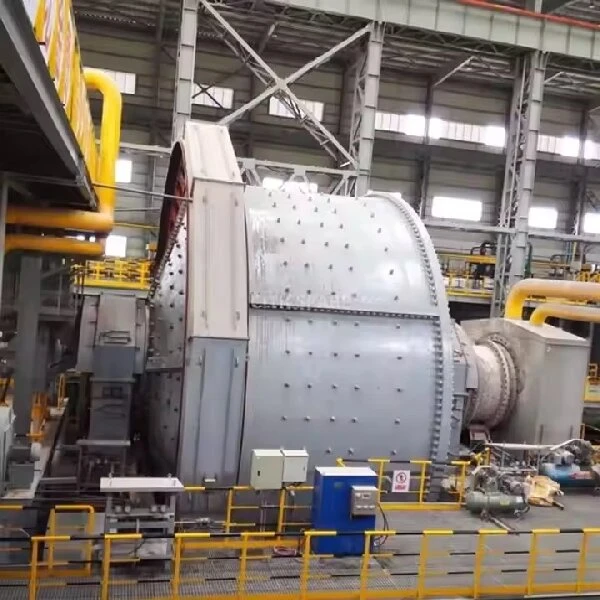

Another challenge is the initial setup. Getting a special ball mill up and running for continuous production requires careful planning and calibration. You need to ensure that the feed system is working properly, the mill is balanced, and the control system is set up to monitor and adjust the process parameters. Any small mistake in the setup can lead to problems down the line, such as uneven grinding or over - heating.
To overcome these challenges, it's important to work with a reliable supplier like me. I've been in the business for years, and I know how to set up special ball mills for continuous production. I can provide you with high - quality mills that are built to last, and I offer comprehensive after - sales support, including maintenance training and spare parts supply.
When it comes to continuous production, it's also crucial to have a good understanding of your material. Different materials have different properties, and you need to choose the right type of special ball mill and the appropriate grinding parameters. For example, if you're working with a brittle material, a High Energy Ball Milling might be the best choice, as it can break down the material quickly. On the other hand, if you're dealing with a tough, fibrous material, a Sag Ball Mill might be more suitable, as it can provide a more gentle and consistent grinding action.
In addition, you need to consider the overall production environment. Factors such as temperature, humidity, and dust levels can all affect the performance of the ball mill. You need to ensure that the mill is installed in a suitable location and that proper ventilation and dust collection systems are in place.
So, in conclusion, special ball mills can definitely be used for continuous production, but it requires careful planning, proper maintenance, and the right expertise. If you're thinking about investing in a special ball mill for continuous production, I'd love to have a chat with you. I can help you choose the right mill for your needs, set it up correctly, and provide you with the support you need to keep it running smoothly.
Whether you're a small - scale operation looking to increase your production capacity or a large - scale industrial company in need of a reliable grinding solution, I'm here to help. Contact me today to discuss your requirements and let's see how we can work together to make your continuous production goals a reality.
References
- "Ball Milling Theory and Practice for the Amateur Pyrotechnician" by Lloyd Sponenburgh
- "Mineral Processing Design and Operations: An Introduction" by Barry A. Wills and Tim Napier - Munn




