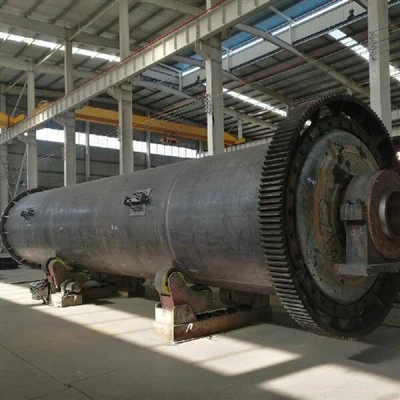
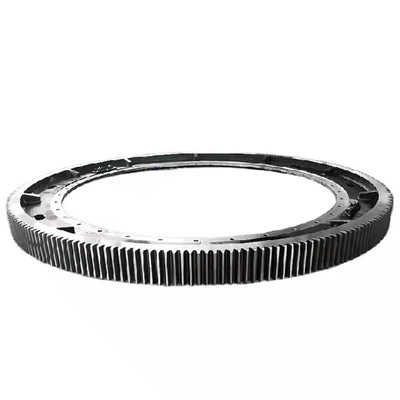
Hey there! As a supplier of Rotary Kiln Tyre, I've seen firsthand how important it is to keep these crucial components in top - notch condition. Rotary kiln tyres play a vital role in the smooth operation of rotary kilns, which are widely used in industries like cement, mining, and metallurgy. In this blog, I'm gonna share with you the inspection methods for a rotary kiln tyre.
Visual Inspection
The first and easiest way to start inspecting a rotary kiln tyre is through a visual check. This is something you can do regularly, and it doesn't require any fancy equipment.
Surface Cracks
Take a good look at the surface of the tyre. Cracks can develop over time due to the high - stress environment the tyre operates in. Small surface cracks might seem harmless at first, but they can propagate and lead to more serious issues. Check for both radial and circumferential cracks. Radial cracks run from the inner to the outer edge of the tyre, while circumferential cracks go around the tyre. If you spot any cracks, note down their location, length, and width. Even a hair - thin crack should be monitored closely, as it could grow and cause the tyre to fail.


Wear and Tear
Over time, the tyre will experience wear. Look for uneven wear patterns. Uneven wear can indicate problems with the alignment of the kiln or the load distribution. For example, if one side of the tyre is more worn than the other, it could mean that the kiln is not properly aligned, or there's an imbalance in the material being processed. Also, check for signs of abrasion on the contact surface between the tyre and the Support Roller for Rotary Kiln. Excessive abrasion can lead to a reduction in the tyre's thickness, which weakens its structural integrity.
Deformation
Inspect the tyre for any signs of deformation. A deformed tyre can cause the kiln to operate inefficiently and can put extra stress on other components. Look for bulges or dents on the surface. A bulge might be a sign of internal damage or over - loading, while a dent could be the result of an impact.
Dimensional Inspection
Measuring the dimensions of the rotary kiln tyre is crucial to ensure that it meets the required specifications.
Diameter Measurement
Use a measuring tape or a caliper to measure the diameter of the tyre at different points. The diameter should be consistent around the entire circumference. Any significant variation in diameter can cause problems with the rotation of the kiln. For instance, if the diameter is larger in one area, it can create an uneven load on the support rollers, leading to premature wear.
Width Measurement
Measure the width of the tyre as well. A change in width can indicate wear or deformation. Compare the measured width with the original specifications. If the width has decreased significantly, it might be time to consider replacing the tyre.
Thickness Measurement
The thickness of the tyre is another important dimension. You can use ultrasonic thickness gauges to measure the thickness at various points. A reduction in thickness can weaken the tyre and increase the risk of failure. Keep a record of the thickness measurements over time to track the wear rate of the tyre.
Alignment Inspection
Proper alignment of the rotary kiln tyre is essential for its smooth operation.
Axial Alignment
Check the axial alignment of the tyre with respect to the kiln axis. Misaligned tyres can cause the kiln to wobble, which can lead to excessive wear on the tyres, support rollers, and Kiln Thrust Roller. You can use laser alignment tools to measure the axial alignment accurately. If the alignment is off, adjustments need to be made to ensure that the tyre runs parallel to the kiln axis.
Radial Alignment
Radial alignment refers to the position of the tyre in relation to the support rollers. The tyre should be centered on the support rollers to distribute the load evenly. Use a straightedge or a laser alignment device to check the radial alignment. If the tyre is not centered, it can cause uneven wear on the rollers and the tyre itself.
Non - Destructive Testing
Non - destructive testing (NDT) methods can be used to detect internal defects in the rotary kiln tyre without causing any damage to it.
Ultrasonic Testing
Ultrasonic testing is a common NDT method for rotary kiln tyres. It uses high - frequency sound waves to detect internal flaws such as cracks, voids, or inclusions. A technician will apply a coupling agent to the surface of the tyre and then use an ultrasonic transducer to send sound waves into the tyre. The waves will bounce back from any internal defects, and the technician can analyze the reflected waves to determine the size, location, and type of the defect.
Magnetic Particle Testing
Magnetic particle testing is suitable for detecting surface and near - surface defects in ferromagnetic materials, which most rotary kiln tyres are made of. A magnetic field is applied to the tyre, and iron particles are sprinkled on the surface. If there's a defect, the magnetic field will be distorted, and the iron particles will accumulate at the defect site, making it visible.
Temperature Monitoring
Monitoring the temperature of the rotary kiln tyre can provide valuable insights into its condition.
Infrared Thermography
Use an infrared camera to measure the surface temperature of the tyre. Hot spots on the tyre can indicate problems such as excessive friction, misalignment, or internal damage. For example, if there's a hot spot at the contact point between the tyre and the support roller, it could be a sign of improper lubrication or misalignment.
Thermocouples
Thermocouples can be installed at specific points on the tyre to continuously monitor the temperature. This can help detect any sudden changes in temperature, which could be an early warning sign of a problem.
Vibration Analysis
Vibration analysis is another useful method for inspecting rotary kiln tyres.
Accelerometers
Install accelerometers on the tyre or the support structure to measure the vibration levels. Excessive vibration can be a sign of various problems, such as unbalance, misalignment, or mechanical looseness. Analyze the vibration data to determine the frequency and amplitude of the vibrations. Different frequencies can indicate different types of problems. For example, a high - frequency vibration might be caused by a small defect in the tyre, while a low - frequency vibration could be due to a misaligned kiln.
In conclusion, regular inspection of rotary kiln tyres is essential to ensure the safe and efficient operation of rotary kilns. By using a combination of visual inspection, dimensional inspection, alignment inspection, non - destructive testing, temperature monitoring, and vibration analysis, you can detect potential problems early and take appropriate measures to prevent costly breakdowns.
If you're in the market for high - quality Rotary Kiln Tyre, we've got you covered. Our tyres are made from top - grade materials and are designed to meet the highest standards. We're always ready to assist you with your procurement needs. Whether you have questions about our products or want to discuss a potential purchase, feel free to reach out and start a procurement negotiation with us.
References
- "Rotary Kiln Technology Handbook"
- "Non - Destructive Testing Methods for Industrial Components"
- "Vibration Analysis in Industrial Machinery"