Hey there! As a supplier of ball mill bearings, I often get asked about the axial load capacity of these crucial components. So, I thought I'd take a deep - dive into this topic and share everything I know with you.


First off, let's understand what axial load is. In simple terms, an axial load is a force that acts parallel to the axis of rotation of the bearing. When it comes to ball mill bearings, this load can come from a variety of sources. For example, the weight of the mill's rotating parts, the force exerted by the grinding media and the material being processed, and even the vibrations during operation can all contribute to the axial load.
The axial load capacity of a ball mill bearing is the maximum amount of axial force that the bearing can handle without failing or experiencing excessive wear. It's a super important factor because if the axial load exceeds the bearing's capacity, it can lead to premature failure, increased maintenance costs, and even downtime for the ball mill, which is a big no - no for any business.
There are several factors that affect the axial load capacity of a ball mill bearing.
One of the most significant factors is the bearing design. Different types of bearings have different axial load - handling capabilities. For instance, angular contact ball bearings are designed to handle both radial and axial loads, and they can be adjusted to handle more axial load depending on the contact angle. The larger the contact angle, the higher the axial load capacity. On the other hand, deep - groove ball bearings are mainly designed for radial loads, but they can also handle some axial load, although their capacity in this regard is relatively limited compared to angular contact ball bearings.
The size of the bearing also plays a huge role. Generally speaking, larger bearings have a higher axial load capacity. This is because they have more rolling elements and a larger contact area, which allows them to distribute the load more evenly. So, when you're choosing a ball mill bearing, you need to consider the size carefully based on the expected axial load of your ball mill.
The quality of the materials used in the bearing is another crucial factor. High - quality materials can withstand higher loads and resist wear and fatigue better. For example, bearings made from high - grade steel alloys are more likely to have a higher axial load capacity than those made from lower - quality materials. At our company, we always use top - notch materials to ensure that our ball mill bearings can handle heavy axial loads.
The operating conditions of the ball mill also impact the axial load capacity. If the ball mill operates in a high - temperature environment, the material properties of the bearing can change, which may reduce its axial load capacity. Similarly, if there is a lot of dust or contaminants in the operating environment, it can cause abrasion and damage to the bearing, also affecting its ability to handle axial loads.
Now, you might be wondering how to determine the axial load capacity you need for your ball mill. Well, it's not an easy task, but there are a few steps you can take. First, you need to calculate the total axial force acting on the bearing. This involves considering all the factors I mentioned earlier, like the weight of the rotating parts, the force from the grinding media, and the vibrations. You can use engineering formulas and software to help with this calculation.
Once you have an estimate of the axial load, you can then select a bearing with a capacity that exceeds this load. It's always a good idea to have some safety margin to account for any unexpected increases in load during operation.
As a ball mill bearing supplier, we offer a wide range of bearings with different axial load capacities to meet the diverse needs of our customers. Whether you need a bearing for a small - scale ball mill or a large industrial one, we've got you covered.
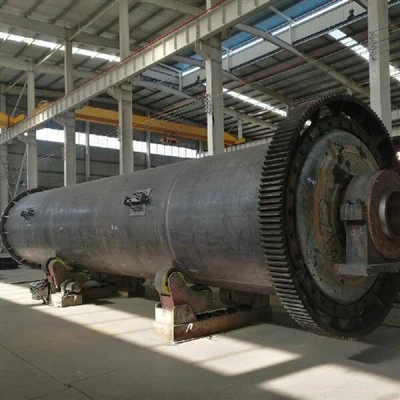
In addition to ball mill bearings, we also supply other important ball mill parts. For example, if you're looking for a High - quality Ball Mill Trunnion, we have high - quality options available. The trunnion is a key part of the ball mill that helps support the rotating drum, and having a good - quality trunnion is essential for the smooth operation of the mill.
We also offer Vertical Roller Mill Grinding Roller. These grinding rollers are crucial for the grinding process in vertical roller mills, and our products are designed to provide efficient and reliable grinding performance.
And don't forget about the Ball Mill Bearing House. The bearing house protects the bearing from external contaminants and helps maintain the proper alignment of the bearing. Our bearing houses are made to high standards to ensure the long - term performance of the bearings.
If you're in the market for ball mill bearings or any of the related parts I mentioned, we'd love to have a chat with you. We can help you select the right products based on your specific requirements and provide you with all the technical support you need. Whether you're a small - scale operator or a large industrial company, we're committed to providing you with the best solutions at competitive prices. So, don't hesitate to reach out and start a conversation about your ball mill part needs.
References
- Harris, T. A. (2001). Rolling Bearing Analysis. Wiley.
- Zaretsky, E. V. (2010). Ball and Roller Bearing Engineering. CRC Press.