


Hey there! As a supplier of Cyclone Dip Tubes, I often get asked if these tubes can be used in small - scale cyclones. Well, let's dig into this topic and find out.
First off, what's a cyclone and what's a dip tube? A cyclone is a device that separates particles from a gas stream. It works by creating a swirling flow, where the heavier particles are thrown to the outer walls and then collected at the bottom. The dip tube, on the other hand, is a crucial part of the cyclone. It's usually placed at the bottom of the cyclone and helps in the proper discharge of the separated particles.
Now, for small - scale cyclones. These are often used in various industries where the volume of gas - particle mixture to be processed is relatively low. Think of small workshops, laboratories, or even some small - scale manufacturing units. The question is, can our Cyclone Dip Tubes be a good fit for them?
One of the main advantages of using a Cyclone Dip Tube in a small - scale cyclone is efficiency. Even in a small - scale setup, proper separation of particles is essential. A well - designed dip tube can enhance the separation efficiency by ensuring that the separated particles are smoothly discharged without getting re - entrained into the gas stream. This means cleaner gas output and better overall performance of the cyclone.
Let's talk about the design aspects. Our Cyclone Dip Tubes are available in different sizes and materials. For small - scale cyclones, we can offer smaller - sized dip tubes that are precisely engineered to fit the dimensions of the cyclone. This customizability is a huge plus. Whether you have a cyclone with a unique shape or a specific capacity requirement, we can provide a dip tube that meets your needs.
When it comes to materials, we have options like stainless steel, carbon steel, and even some special alloys. Stainless steel is a popular choice for small - scale cyclones because it's corrosion - resistant. In a small workshop environment, there might be various chemicals or moisture in the gas stream, and stainless steel can withstand these conditions without getting damaged easily. Carbon steel, on the other hand, is more cost - effective and can be a great option if the operating conditions are less harsh.
Another important factor is the installation process. Installing a Cyclone Dip Tube in a small - scale cyclone is relatively straightforward. Our dip tubes come with clear installation instructions, and in most cases, you can install them without the need for a professional technician. This saves both time and money, which is especially important for small - scale operations with limited resources.
Now, let's compare our Cyclone Dip Tubes with some other components used in small - scale cyclones. For example, Belt Conveyor In Cement Plant is a common component in larger cement plants, but it might be overkill for a small - scale cyclone setup. A belt conveyor is mainly used for transporting large volumes of materials over long distances. In a small - scale cyclone, the amount of separated particles is usually not that large, and a well - functioning dip tube can handle the discharge more efficiently.
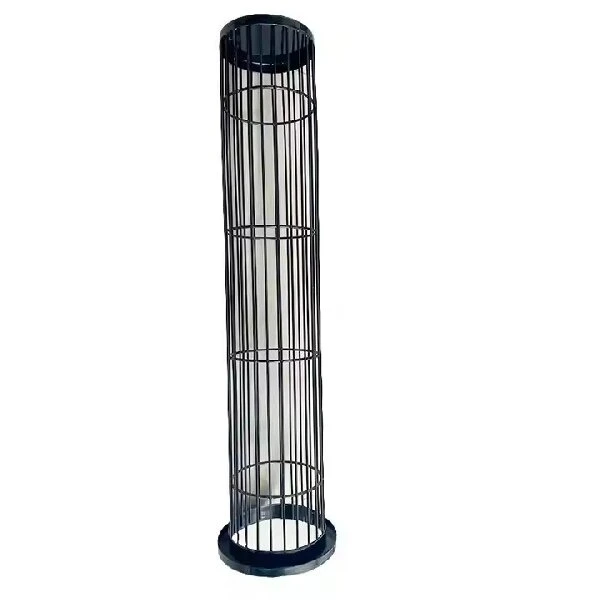
Similarly, Industrial Filter Bag Cage is used in some filtration systems. While filter bag cages are useful for capturing fine particles, they can be complex and expensive to maintain. A Cyclone Dip Tube, on the other hand, provides a simpler and more cost - effective solution for particle separation in small - scale cyclones.
In terms of maintenance, our Cyclone Dip Tubes are very low - maintenance. They don't have a lot of moving parts, which means there are fewer things that can go wrong. Periodic inspections to check for any signs of wear and tear are usually sufficient. And if any replacement is needed, our dip tubes are easy to replace, minimizing downtime for your small - scale cyclone operation.
But of course, like any product, there are some considerations. In some cases, the design of the small - scale cyclone itself might not be compatible with a dip tube. For example, if the cyclone has a very irregular shape or a unique internal flow pattern, it might require some modifications to install the dip tube properly. However, our technical team is always ready to assist you in such situations. We can analyze your cyclone design and provide solutions to make the installation work.
Another aspect to consider is the cost. While our Cyclone Dip Tubes are cost - effective, for some extremely budget - constrained small - scale operations, the initial investment might seem a bit high. But it's important to look at the long - term benefits. The improved efficiency and reduced maintenance costs over time can more than make up for the initial expense.
In conclusion, a Cyclone Dip Tube can definitely be used in a small - scale cyclone. It offers numerous benefits in terms of efficiency, customizability, and ease of installation and maintenance. If you're running a small - scale operation that uses a cyclone, I highly recommend considering our Cyclone Dip Tubes. They can significantly improve the performance of your cyclone and help you achieve better results.

If you're interested in learning more about our Cyclone Dip Tubes or want to discuss your specific requirements for a small - scale cyclone, don't hesitate to reach out. We're here to help you make the right choice for your operation.
References
- "Cyclone Separation Technology" - A comprehensive guide on cyclone design and operation.
- Industry reports on small - scale cyclone applications and component requirements.




