Surface roughness is a critical parameter in the manufacturing and functional performance of kiln thrust rollers. As a leading supplier of Kiln Thrust Roller, understanding the specific surface roughness requirements is essential to ensure the optimal operation of rotary kilns.
Importance of Surface Roughness in Kiln Thrust Rollers
Kiln thrust rollers play a vital role in supporting the weight of the rotary kiln and guiding its axial movement. The surface roughness of these rollers directly impacts several key aspects of kiln performance.
Friction and Wear
The surface roughness affects the frictional forces between the kiln shell and the thrust roller. A proper surface roughness can provide sufficient friction to prevent slippage, which is crucial for the stable rotation of the kiln. At the same time, it helps to distribute the contact stress evenly, reducing wear on both the roller and the kiln shell. If the surface is too smooth, there may be insufficient friction, leading to relative sliding and potential damage to the components. On the other hand, an overly rough surface can cause excessive wear and increase the risk of surface damage, such as pitting and spalling.
Heat Transfer
In a rotary kiln, heat transfer occurs between the hot kiln shell and the thrust rollers. The surface roughness can influence the heat transfer coefficient. A suitable surface roughness can enhance the contact area between the roller and the shell, promoting better heat dissipation. This is important for maintaining the temperature within an acceptable range for the roller material, which helps to prevent thermal deformation and extend the service life of the roller.
Alignment and Stability
The surface finish of the thrust roller also affects the alignment and stability of the kiln. A uniform surface roughness ensures that the contact between the roller and the kiln shell is consistent along the entire length of the roller. This helps to maintain the correct alignment of the kiln, reducing the risk of misalignment-induced problems such as uneven loading, vibration, and premature wear of other components.


Surface Roughness Requirements
The specific surface roughness requirements for kiln thrust rollers depend on several factors, including the type of kiln, the operating conditions, and the material of the roller.
Ra Value
The arithmetic average roughness, denoted as Ra, is a commonly used parameter to measure surface roughness. For kiln thrust rollers, the Ra value typically ranges from 1.6 to 6.3 micrometers. In general, a lower Ra value indicates a smoother surface. For applications where high precision and low wear are required, a lower Ra value may be preferred. For example, in some modern, high - efficiency rotary kilns, a Ra value around 1.6 - 3.2 micrometers is often specified to ensure optimal performance.
However, in some cases where a certain level of friction is needed, a slightly higher Ra value, up to 6.3 micrometers, may be acceptable. This is especially true for kilns operating under heavy loads or in environments with high levels of dust and debris, where a rougher surface can provide better grip and prevent slippage.
Rz Value
The maximum height of the profile, Rz, is another important parameter. It represents the difference between the highest peak and the lowest valley within a sampling length. The Rz value for kiln thrust rollers usually ranges from 10 to 40 micrometers. A lower Rz value indicates a more uniform surface with less pronounced peaks and valleys. Similar to the Ra value, the specific Rz requirement depends on the operating conditions. In applications where smooth operation and minimal vibration are crucial, a lower Rz value is preferred.
Surface Texture
In addition to the numerical values of Ra and Rz, the surface texture also matters. A regular and uniform surface texture is generally desirable for kiln thrust rollers. This can be achieved through proper machining processes, such as grinding and honing. A random or irregular surface texture may lead to uneven stress distribution and increased wear. For example, a circumferential texture can help to guide the lubricant along the roller surface, improving the lubrication effect and reducing friction.
Manufacturing Processes to Achieve the Required Surface Roughness
As a Kiln Thrust Roller supplier, we use a variety of manufacturing processes to meet the specific surface roughness requirements.
Turning
Turning is often the first step in the manufacturing of kiln thrust rollers. It can quickly remove the excess material from the raw stock and create the basic shape of the roller. However, the surface roughness achieved by turning is relatively high, usually with an Ra value in the range of 6.3 - 12.5 micrometers. Therefore, turning is mainly used for rough machining, and further finishing processes are required to achieve the desired surface roughness.
Grinding
Grinding is a widely used finishing process for kiln thrust rollers. It can produce a smooth and precise surface with a relatively low Ra value. By using different grinding wheels and grinding parameters, we can control the surface roughness within a narrow range. For example, fine - grained grinding wheels and low - feed grinding operations can result in a smoother surface. After grinding, the Ra value can be reduced to 0.8 - 3.2 micrometers, which meets the requirements of most kiln applications.
Honing
Honing is a super - finishing process that can further improve the surface quality of the roller. It can remove the microscopic irregularities left by grinding, resulting in a very smooth and uniform surface. Honing is especially suitable for applications where extremely low surface roughness and high surface integrity are required. The Ra value after honing can be as low as 0.1 - 0.4 micrometers.
Quality Control and Inspection
To ensure that our Kiln Thrust Roller meet the specified surface roughness requirements, we have a strict quality control and inspection system in place.
In - process Inspection
During the manufacturing process, we conduct regular in - process inspections to monitor the surface roughness. We use surface roughness measuring instruments, such as profilometers, to measure the Ra and Rz values at different stages of production. This allows us to make timely adjustments to the machining parameters if the surface roughness does not meet the requirements.
Final Inspection
Before the rollers are shipped to the customers, a final inspection is carried out. In addition to measuring the surface roughness, we also check the surface texture, dimensional accuracy, and hardness of the rollers. Only when all the quality requirements are met will the rollers be approved for delivery.
Compatibility with Other Rotary Kiln Components
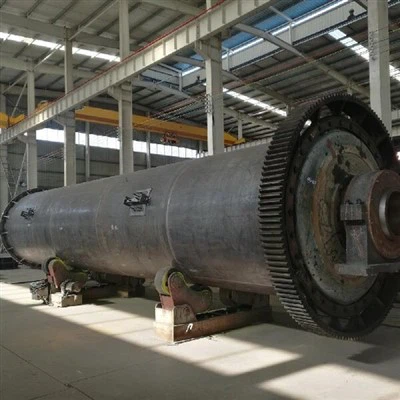
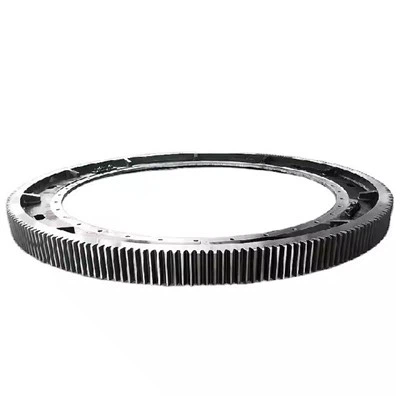
Kiln thrust rollers do not work in isolation. They interact with other components of the rotary kiln, such as Support Roller for Rotary Kiln and Rotary Kiln Pinion. The surface roughness of the thrust rollers should be compatible with these components to ensure the overall performance of the kiln.
For example, the surface roughness of the thrust rollers and the support rollers should be coordinated to ensure even load distribution and smooth rotation of the kiln. If the surface roughness of the thrust rollers is significantly different from that of the support rollers, it may lead to uneven wear and misalignment issues. Similarly, the interaction between the thrust rollers and the rotary kiln pinion also requires a proper surface roughness to ensure efficient power transmission and minimal noise.
Conclusion
In conclusion, the surface roughness requirements for kiln thrust rollers are crucial for the optimal performance and longevity of rotary kilns. As a professional Kiln Thrust Roller supplier, we understand the importance of these requirements and have the expertise and technology to produce high - quality rollers that meet the specific needs of our customers.
If you are in the market for kiln thrust rollers or have any questions about our products, we invite you to contact us for more information and to discuss your procurement needs. Our team of experts is ready to provide you with professional advice and solutions.
References
- Smith, J. (20XX). "Surface Engineering of Industrial Rollers." Journal of Manufacturing Science.
- Brown, A. (20XX). "Rotary Kiln Design and Operation." Mechanical Engineering Press.