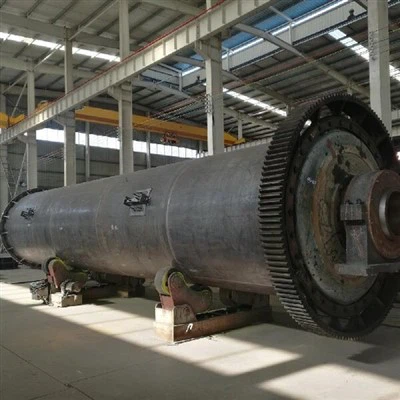
Rotary kilns are essential equipment in various industries, including cement, lime, and metallurgy. The tyre, also known as the riding ring, is a critical component of a rotary kiln. It plays a vital role in supporting the kiln shell and facilitating its rotation. However, like any mechanical part, rotary kiln tyres are subject to wear over time. Understanding the wear mechanisms of a rotary kiln tyre is crucial for ensuring the efficient and reliable operation of the kiln. As a supplier of rotary kiln tyres, I have extensive experience in this field and would like to share some insights into the wear mechanisms of these important components.
Abrasive Wear
Abrasive wear is one of the most common wear mechanisms in rotary kiln tyres. It occurs when hard particles, such as sand, dust, or debris, come into contact with the tyre surface and cause material removal. These particles can be present in the raw materials being processed in the kiln, or they can enter the kiln system through the air intake or other openings.
The abrasive wear process typically involves two main types of abrasion: two - body abrasion and three - body abrasion. In two - body abrasion, the hard particles slide or roll directly on the tyre surface, cutting and plowing the material. Three - body abrasion occurs when the particles are trapped between the tyre and another surface, such as the support roller. The trapped particles act as abrasives, causing wear on both the tyre and the support roller.
To reduce abrasive wear, it is important to ensure proper dust control in the kiln environment. This can be achieved through the use of dust collectors, filters, and proper sealing of the kiln system. Additionally, selecting a tyre material with high abrasion resistance can significantly extend the tyre's service life.
Adhesive Wear
Adhesive wear occurs when two surfaces in contact experience local welding or bonding due to high contact pressures and relative motion. In the case of a rotary kiln tyre, adhesive wear can happen between the tyre and the support roller. When the surfaces are in contact under high pressure, the asperities (small surface irregularities) on the two surfaces can weld together. As the surfaces move relative to each other, these welded junctions are sheared off, resulting in material transfer and wear.
Several factors can contribute to adhesive wear. High contact pressures, which can be caused by improper alignment of the kiln or overloading, increase the likelihood of adhesive bonding. Surface roughness also plays a role; rougher surfaces have more asperities, which are more likely to form welded junctions.
To prevent adhesive wear, proper alignment of the kiln and its components is essential. Regular maintenance and inspection of the support rollers and tyres can help detect and correct any alignment issues early. Additionally, using lubricants or anti - wear coatings on the contact surfaces can reduce the friction and the tendency for adhesive bonding.
Fatigue Wear
Fatigue wear is another significant wear mechanism in rotary kiln tyres. The tyre is subjected to cyclic loading as the kiln rotates. The repeated application of stress causes microscopic cracks to initiate and propagate in the tyre material. Over time, these cracks can grow and eventually lead to the failure of the tyre.
There are two main types of fatigue wear: bending fatigue and contact fatigue. Bending fatigue occurs due to the bending stresses in the tyre as it rotates on the support rollers. The outer surface of the tyre experiences tensile stresses, while the inner surface experiences compressive stresses. Contact fatigue, on the other hand, is caused by the repeated contact stresses between the tyre and the support roller.
To mitigate fatigue wear, it is important to design the tyre with appropriate dimensions and material properties. The tyre should have sufficient strength and toughness to withstand the cyclic loading. Regular non - destructive testing, such as ultrasonic testing or magnetic particle testing, can be used to detect early signs of fatigue cracks.
Corrosive Wear
Corrosive wear is a combination of corrosion and wear processes. In a rotary kiln environment, the tyre can be exposed to various corrosive agents, such as acidic or alkaline gases, moisture, and chemicals. Corrosion weakens the surface of the tyre, making it more susceptible to wear.


The corrosive agents can react with the tyre material, forming corrosion products. These products can be brittle and easily removed by the mechanical action of wear, such as abrasion or friction. Additionally, the corrosion can create pits and crevices on the tyre surface, which can act as stress concentrators and accelerate fatigue wear.
To prevent corrosive wear, protective coatings can be applied to the tyre surface. These coatings act as a barrier between the tyre material and the corrosive environment. Proper ventilation and humidity control in the kiln area can also help reduce the exposure to corrosive agents.
Impact Wear
Impact wear can occur when the rotary kiln tyre is subjected to sudden impacts or shocks. This can happen during the start - up or shut - down of the kiln, or when there are sudden changes in the load or operating conditions. The impact forces can cause local deformation and cracking of the tyre material.
For example, if there is a sudden blockage in the kiln, the material inside the kiln can cause a large impact on the tyre when it moves suddenly. Impact wear can also be caused by the improper handling of the kiln components during maintenance or installation.
To minimize impact wear, it is important to follow proper operating procedures during start - up, shut - down, and normal operation of the kiln. Adequate shock - absorbing devices can be installed to reduce the impact forces on the tyre.
The Role of Support Components
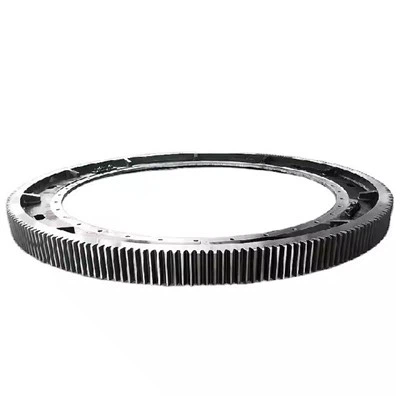
The support roller for rotary kiln Support Roller for Rotary Kiln, kiln thrust roller Kiln Thrust Roller, and kiln girth gear Kiln Girth Gear all play important roles in the wear of the rotary kiln tyre. The support roller provides the support for the tyre and allows the kiln to rotate smoothly. If the support roller is not properly maintained or aligned, it can cause uneven wear on the tyre.
The kiln thrust roller helps to control the axial movement of the kiln. Any misalignment or malfunction of the thrust roller can lead to increased stresses on the tyre, accelerating wear. The kiln girth gear is responsible for transmitting the power to rotate the kiln. A damaged or misaligned girth gear can cause vibrations and uneven loading on the tyre, resulting in premature wear.
As a rotary kiln tyre supplier, we understand the importance of these support components in the overall performance of the kiln. We offer a comprehensive range of high - quality support rollers, thrust rollers, and girth gears to ensure the optimal operation of your rotary kiln.
Conclusion
In conclusion, the wear mechanisms of a rotary kiln tyre are complex and involve multiple factors. Abrasive wear, adhesive wear, fatigue wear, corrosive wear, and impact wear can all contribute to the degradation of the tyre over time. Understanding these wear mechanisms is essential for implementing effective preventive and maintenance strategies.
By taking appropriate measures, such as proper dust control, alignment, material selection, and the use of protective coatings, the service life of the rotary kiln tyre can be significantly extended. As a supplier of rotary kiln tyres, we are committed to providing high - quality products and technical support to our customers. If you are facing issues with the wear of your rotary kiln tyres or are in need of new tyres, please do not hesitate to contact us for procurement and technical discussions. We are here to help you ensure the efficient and reliable operation of your rotary kiln.
References
- Schey, J. A. (1987). Tribology in Metalworking: Friction, Lubrication, and Wear. American Society for Metals.
- Suh, N. P. (1973). Wear of Materials. Elsevier.
- Hutchings, I. M. (1992). Tribology: Friction and Wear of Engineering Materials. CRC Press.