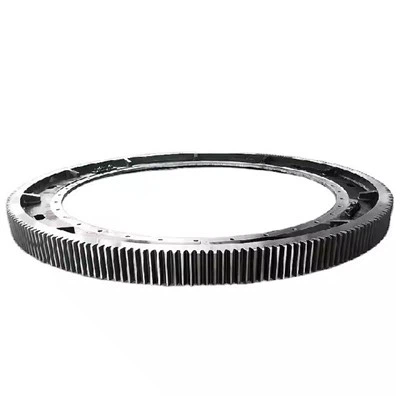
As a seasoned supplier of Kiln Girth Gears, I am often asked about the intricate manufacturing process behind these essential components. In this blog post, I will take you through the step-by-step journey of creating a high-quality kiln girth gear, highlighting the key stages and technologies involved.


1. Material Selection
The foundation of any exceptional kiln girth gear lies in the careful selection of materials. We typically opt for high-quality alloy steels, such as 42CrMo or 35CrMo, due to their excellent mechanical properties, including high strength, good toughness, and resistance to wear and fatigue. These materials are sourced from reputable suppliers and undergo strict quality control checks to ensure they meet our stringent standards.
2. Forging
Once the appropriate material is selected, the forging process begins. Forging is a critical step that shapes the raw material into the basic form of the girth gear. It involves heating the steel billet to a specific temperature and then applying pressure to deform it. This process not only refines the grain structure of the steel, enhancing its strength and durability but also helps to eliminate internal defects.
During forging, skilled operators use hydraulic presses or hammers to shape the billet gradually. The number of forging blows and the amount of pressure applied are carefully controlled to achieve the desired dimensions and density. After forging, the rough-shaped girth gear undergoes a heat treatment process to relieve internal stresses and improve its mechanical properties further.
3. Machining
After forging and heat treatment, the girth gear moves on to the machining stage. This is where the gear is precisely shaped and its teeth are cut to the required specifications. Machining is a complex process that requires advanced equipment and highly skilled machinists.
The first step in machining is turning, where the outer diameter, inner diameter, and faces of the girth gear are machined to the correct dimensions. This is typically done on a lathe, which rotates the gear while a cutting tool removes excess material. Next, the gear teeth are cut using a gear hobbing machine or a gear shaping machine. These machines use specially designed cutting tools to create the precise tooth profile required for smooth and efficient operation.
In addition to turning and gear cutting, other machining operations may be performed, such as drilling holes for mounting bolts or milling keyways. Throughout the machining process, strict quality control measures are in place to ensure that the dimensions and surface finish of the girth gear meet the design requirements.
4. Heat Treatment
Heat treatment is a crucial step in the manufacturing process of a kiln girth gear. It involves heating the gear to a specific temperature and then cooling it at a controlled rate to achieve the desired hardness, strength, and toughness. There are several types of heat treatment processes that may be used, depending on the material and the requirements of the gear.
One common heat treatment process is quenching and tempering. Quenching involves heating the gear to a high temperature and then rapidly cooling it in a quenching medium, such as oil or water. This process hardens the steel but also makes it brittle. To reduce the brittleness and improve the toughness of the gear, it is then tempered by heating it to a lower temperature and holding it there for a specific period of time.
Another heat treatment process that may be used is carburizing. Carburizing involves introducing carbon into the surface of the gear to increase its hardness and wear resistance. This is typically done by heating the gear in a carbon-rich environment, such as a gas furnace or a salt bath. After carburizing, the gear is quenched and tempered to achieve the desired properties.
5. Surface Treatment
Surface treatment is an important step in enhancing the performance and longevity of a kiln girth gear. It involves applying a protective coating or treatment to the surface of the gear to prevent corrosion, reduce friction, and improve wear resistance.
One common surface treatment process is nitriding. Nitriding involves introducing nitrogen into the surface of the gear to form a hard, wear-resistant nitride layer. This process is typically carried out in a nitriding furnace at a relatively low temperature. Nitriding not only improves the wear resistance of the gear but also reduces friction, which can lead to improved efficiency and reduced energy consumption.
Another surface treatment process that may be used is painting or coating. This involves applying a layer of paint or a protective coating to the surface of the gear to prevent corrosion. The type of paint or coating used depends on the operating environment of the gear and the specific requirements of the customer.
6. Quality Control
Quality control is an integral part of the manufacturing process of a kiln girth gear. At every stage of production, from material selection to final inspection, strict quality control measures are in place to ensure that the gear meets the highest standards of quality and performance.
During the manufacturing process, various non-destructive testing methods are used to detect any internal defects or flaws in the gear. These methods include ultrasonic testing, magnetic particle testing, and dye penetrant testing. In addition, dimensional inspections are carried out using precision measuring instruments, such as calipers, micrometers, and coordinate measuring machines, to ensure that the gear meets the design specifications.
Before the girth gear is shipped to the customer, a final inspection is conducted to verify its quality and performance. This includes a visual inspection, a functional test, and a review of all the quality control records. Only after the gear has passed all the inspections is it approved for shipment.
7. Assembly and Installation
Once the kiln girth gear is manufactured and inspected, it is ready for assembly and installation. The girth gear is typically assembled with other components of the kiln, such as the Rotary Kiln Seal, Support Roller for Rotary Kiln, and Kiln Thrust Roller.
During assembly, careful attention is paid to the alignment and fit of the components to ensure smooth and efficient operation. The installation process also requires proper planning and coordination to ensure that the kiln is installed correctly and safely. Our team of experts can provide technical support and guidance during the assembly and installation process to ensure that everything goes smoothly.
Conclusion
The manufacturing process of a kiln girth gear is a complex and precise operation that requires advanced technology, skilled labor, and strict quality control. From material selection to final assembly, every step is crucial in ensuring the production of a high-quality gear that meets the demanding requirements of the kiln industry.
As a leading supplier of Kiln Girth Gears, we are committed to providing our customers with the best products and services. Our state-of-the-art manufacturing facilities, experienced team of engineers and technicians, and strict quality control measures ensure that our girth gears are of the highest quality and performance.
If you are in the market for a reliable and high-quality kiln girth gear, we invite you to contact us for a consultation. Our team of experts will be happy to discuss your specific requirements and provide you with a customized solution that meets your needs. Let's work together to ensure the smooth and efficient operation of your kiln.
References
- "Gear Manufacturing Handbook" by Eric Oberg, Franklin D. Jones, and Holbrook L. Horton
- "Materials Science and Engineering: An Introduction" by William D. Callister Jr. and David G. Rethwisch
- "Kiln Design and Operation: Principles and Practice" by J. A. Hedley and R. W. Baggs