Selection Overview
A Plant Selected Around the Project
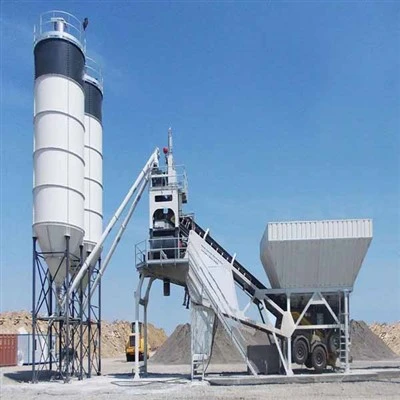
A mobile wet concrete batching plant suits projects that need plant-mixed concrete without a permanent batching facility. Aggregates, cementitious materials, water, and admixtures are measured before entering a twin-shaft mixer. Finished concrete is then discharged to approved receiving equipment.
Mobility does not mean every configuration moves as one load. Silos, screw conveyors, bin extensions, and control rooms may travel separately, so selection must reflect the real relocation plan.

Match the YHZS Model
Choose by Sustained Project Demand
Compare the working demand first, then confirm storage, utilities, truck cycle, site access, and transport limits.

YHZS-25 / YHZS-35
Compact choices for moderate demand, restricted access, and projects where simple relocation matters more than peak output.
YHZS-60
A balanced middle range for dispersed roadwork, precast support, and construction packages with steady material supply.


YHZS-90
Suited to stronger sustained demand when aggregate feeding, powder storage, water supply, and truck circulation are properly coordinated.
YHZS-120
The highest listed range, requiring a well-planned production chain and sufficient supporting equipment rather than capacity selection alone.

Configuration Inputs
Three Inputs That Shape the Configuration
Material handling, mixing duty, and control requirements determine the practical plant arrangement.


Wet-Mix Production
One Controlled Wet-Mix Sequence
Aggregate is batched while cementitious materials, water, and admixtures follow separate weighing paths. The control system transfers each measured component to the twin-shaft mixer, completes the programmed mixing stage, and releases finished concrete.

Core Systems
Integrated Systems for Consistent Operation
The mixer, aggregate batching unit, powder weighing and conveying system, water and admixture circuits, pneumatics, and control system operate as one production line. Published mixer pairings run from JS500 to JS2000, with nominal discharge from 0.5 to 2.0 m3 per batch.
01
Mixer and weighing
Actual production depends on recipe complexity, aggregate condition, feeding continuity, mixer cycle, discharge coordination, calibration, and operating practice.
02
Material supply
Loader, powder delivery, water supply, and truck cycles must support the selected plant output.
03
Control and calibration
Routine inspection and calibrated weighing are essential to stable batching.

Applications and Site Planning
Applications That Benefit from Relocation-Ready Production
Use site conditions and concrete logistics to decide whether a mobile wet plant is appropriate.

Airport and Port Works
Useful where concrete demand moves between work zones and permanent batching infrastructure is impractical.

Highway and Railway Packages
Supports dispersed civil works when material supply and truck cycles remain coordinated with the paving or structural schedule.

Industrial and Civil Construction
Provides plant-mixed concrete near major building packages with planned access, drainage, power, and storage.

Restricted-Height Sites
A project-specific layout can address access and clearance limits after dimensions and lifting arrangements are reviewed.
Hot Tags: mobile wet concrete batching plant, China mobile wet concrete batching plant manufacturers, factory
Technical Data
| Parameter | YHZS-25 | YHZS-35 | YHZS-60 | YHZS-90 | YHZS-120 |
|---|---|---|---|---|---|
| Theoretical production (m3/h) | 25 | 35 | 60 | 90 | 120 |
| Mixer | JS500 | JS750 | JS1000 | JS1500 | JS2000 |
| Nominal discharge (m3) | 0.5 | 0.75 | 1.0 | 1.5 | 2.0 |
| Maximum aggregate (mm) | 60 | 80 | 80 | 80 | 80 |
| Main arrangement | Semi-trailer | Semi-trailer | Semi-trailer | Semi-trailer | Semi-trailer |
| Approx. power (kW) | 60.8 | 72.3 | 92 | 120 | 160 |
Practical Selection Notes
Start with sustained output, then check loader capacity, cement delivery, water supply, mixer cycle, and truck dispatch. Any one of these can limit actual production.
Final dimensions, weight, bin arrangement, voltage, discharge height, storage, and supporting works follow the approved technical proposal and drawing.
Request a YHZS Configuration Review
FAQ
How is a mobile wet plant different from a mobile dry plant?
A wet plant mixes all measured materials in the plant mixer before discharge. A dry plant meters materials for mixing in the truck or another downstream mixer.
Can every YHZS plant move as one complete trailer?
No. The main batching and mixing section is relocation-oriented, while silos, conveyors, extensions, and other auxiliaries may require separate loads.
Which model should I choose?
Choose from sustained hourly demand, recipe requirements, material supply, truck cycle, utilities, site space, and transport limits rather than theoretical output alone.
What information is needed for a technical proposal?
Provide the target output, recipes, aggregate data, powders, admixtures, voltage, site drawing, storage needs, discharge method, climate, and relocation plan.