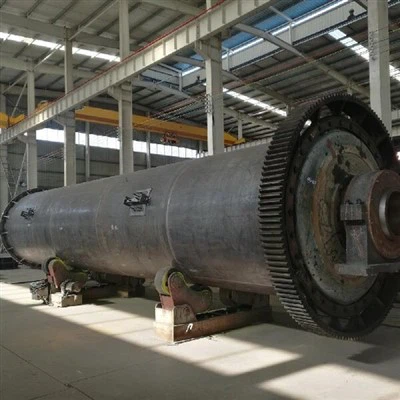
Hey there! As a supplier of special ball mills, I've been getting a lot of questions lately about the effect of the filling rate on the performance of these machines. So, I thought I'd write this blog to share my insights on the topic.
First off, let's talk about what the filling rate is. In a special ball mill, the filling rate refers to the ratio of the volume of the grinding media (like balls, rods, etc.) and the material to be ground to the total volume of the mill's shell. It's a crucial factor that can significantly impact how well the ball mill works.
How Filling Rate Affects Grinding Efficiency
One of the most important aspects of a ball mill's performance is its grinding efficiency. The filling rate plays a huge role here. When the filling rate is too low, there aren't enough grinding media and materials in the mill. This means that the chances of the grinding media hitting and breaking the material are reduced. As a result, the grinding process becomes slower, and the overall efficiency drops.
On the other hand, if the filling rate is too high, the grinding media don't have enough space to move freely. They start to interfere with each other's motion, and instead of effectively grinding the material, they might just push it around. This also leads to a decrease in grinding efficiency.
For example, in a Raymond Mill Machine, which is designed for fine grinding, finding the right filling rate is super important. A proper filling rate ensures that the grinding rollers can effectively crush and grind the material against the grinding ring, maximizing the production of fine powder.
Impact on Energy Consumption
The filling rate also has a direct impact on the energy consumption of the ball mill. When the filling rate is optimal, the ball mill operates more smoothly. The motor doesn't have to work as hard to rotate the mill's shell because the grinding media and material are distributed in a way that allows for efficient movement. This means lower energy consumption and cost savings in the long run.
However, if the filling rate is off, the energy consumption can skyrocket. A low filling rate might cause the mill to run with less load, but the motor still has to keep the mill rotating, which is inefficient. A high filling rate, as mentioned earlier, restricts the movement of the grinding media, forcing the motor to use more energy to overcome the resistance.
In a Semi Autogenous Grinding Mill, where the mill uses a combination of the ore itself and some grinding media for grinding, getting the filling rate right is crucial for energy efficiency. An improper filling rate can lead to excessive energy use and higher operating costs.
Product Quality
The quality of the final product is another area where the filling rate makes a difference. A well - controlled filling rate ensures that the material is ground uniformly. This means that the particle size distribution of the final product is more consistent.
When the filling rate is too low, some of the material might not be ground enough, resulting in a wider particle size distribution. There could be large chunks mixed in with the fine powder, which is not ideal for many applications.
Conversely, a high filling rate can over - grind some of the material, leading to an excessive amount of ultra - fine particles. This can also affect the quality of the final product, especially in industries where a specific particle size is required.
For instance, in a Rod Mill Machine, which is often used for producing materials with a more uniform particle size, maintaining the correct filling rate is essential for achieving the desired product quality.
Determining the Optimal Filling Rate
So, how do you determine the optimal filling rate for a special ball mill? Well, it depends on several factors. The type of material being ground is a big one. Different materials have different densities, hardness, and particle shapes, which all affect how they interact with the grinding media.
The type of grinding media also matters. Balls, rods, and other types of media have different sizes, shapes, and densities, which can influence the filling rate.
The speed of the mill's rotation is another factor. A faster - rotating mill might require a different filling rate compared to a slower - rotating one.
In general, it's a good idea to conduct some tests with different filling rates to see what works best for your specific application. You can start with the manufacturer's recommended filling rate as a baseline and then make adjustments based on your observations of the mill's performance, energy consumption, and product quality.


Conclusion
In conclusion, the filling rate is a critical factor that affects the performance of a special ball mill in many ways. It impacts grinding efficiency, energy consumption, and product quality. As a supplier of special ball mills, I know how important it is to get this right.
If you're in the market for a special ball mill or have any questions about optimizing the filling rate for your existing mill, I'd love to help. Just reach out, and we can have a chat about your specific needs and how we can ensure that your ball mill operates at its best.
References
- Smith, J. (2018). "Ball Mill Operations: A Practical Guide". Industrial Press.
- Johnson, A. (2019). "Advanced Grinding Technologies in Mineral Processing". Elsevier.