Hey there! As a supplier of rotary kiln parts, I often get asked about the various components and their functions. One crucial part that plays a significant role in the operation of a rotary kiln is the gearbox. In this blog, I'll break down what the gearbox does in rotary kiln parts and why it's so important.
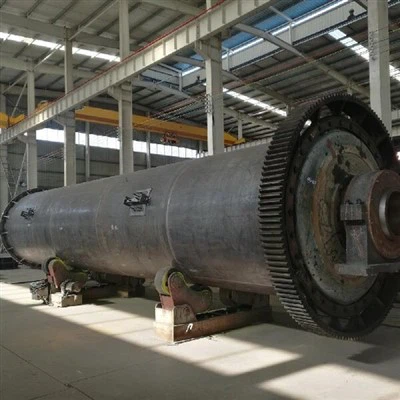
First off, let's understand what a rotary kiln is. It's a large, cylindrical vessel that rotates on its axis, used in various industries like cement, mining, and chemical processing. The kiln is heated to high temperatures, and materials are fed through it for processes like calcination, sintering, or drying. Now, the gearbox comes into the picture as a key element in making this whole operation run smoothly.
Speed and Torque Conversion
One of the primary functions of the gearbox in a rotary kiln is to convert the speed and torque provided by the motor. The motor usually runs at a relatively high speed, but the rotary kiln needs to rotate at a much slower, controlled pace. The gearbox steps down the high - speed rotation of the motor to the appropriate speed for the kiln.
For example, if the motor is running at 1500 revolutions per minute (RPM), the gearbox can reduce this speed to something like 1 - 5 RPM for the kiln. At the same time, it increases the torque. Torque is the rotational force that allows the kiln to turn and handle the heavy load of the materials inside. Without the gearbox, the motor wouldn't be able to provide enough force to rotate the large and heavy kiln effectively.
Power Transmission
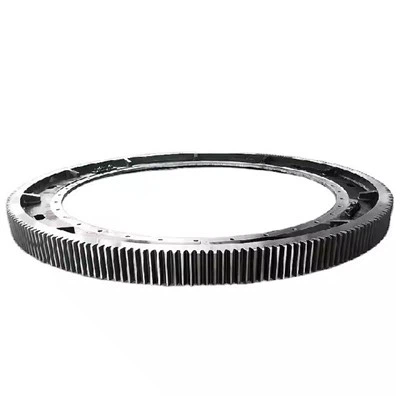
The gearbox also serves as a power transmission device. It takes the power generated by the motor and transfers it to the kiln's drive system. The gears inside the gearbox mesh together in a specific way to ensure that the power is transmitted efficiently. Different types of gears, such as spur gears, helical gears, or bevel gears, can be used depending on the design requirements of the kiln.


Spur gears are simple and straightforward, with teeth that are parallel to the axis of rotation. They are often used in applications where space is limited and the load is relatively light. Helical gears, on the other hand, have teeth that are angled, which allows for smoother and quieter operation. They can handle higher loads and are commonly used in larger rotary kilns. Bevel gears are used when the direction of the shaft needs to be changed, for example, if the motor is mounted at an angle to the kiln's drive shaft.
Load Distribution
Another important function of the gearbox is to distribute the load evenly across the kiln's drive system. The kiln can be subjected to uneven loads due to the movement of materials inside, thermal expansion, or other factors. The gearbox helps to spread the load more evenly among the various components, such as the Rotary Kiln Tyre and the Support Roller for Rotary Kiln.
This even load distribution helps to prevent excessive wear and tear on individual components. For instance, if the load is concentrated on one side of the kiln, it can cause premature failure of the tyres or the support rollers. The gearbox ensures that the force is distributed more uniformly, extending the lifespan of these critical parts.
Precision and Control
Precision is key in the operation of a rotary kiln. The gearbox allows for precise control of the kiln's rotation speed. This is essential for maintaining the quality of the products being processed. For example, in the cement industry, the calcination process needs to be carried out at a specific temperature and rotation speed to ensure the proper formation of clinker.
The gearbox can be adjusted to fine - tune the rotation speed according to the specific requirements of the process. Some modern gearboxes are equipped with advanced control systems that can automatically adjust the speed based on factors like the temperature inside the kiln, the feed rate of the materials, or the power consumption of the motor.
Protection of the Motor
The gearbox also acts as a protective barrier for the motor. It absorbs and dampens the shock and vibration that can occur during the operation of the kiln. The kiln can experience sudden changes in load, such as when a large lump of material enters the kiln or when there is a blockage in the discharge system. These sudden changes can cause a high - impact load on the motor, which could potentially damage it.
The gearbox helps to smooth out these shocks and vibrations, protecting the motor from damage. It also reduces the stress on the motor, which can improve its efficiency and extend its lifespan.
Compatibility with Other Components
The gearbox needs to be compatible with other components in the rotary kiln system. It should be able to work in harmony with the motor, the Kiln Thrust Roller, the tyres, and the support rollers. The design of the gearbox takes into account the power requirements, the speed and torque specifications, and the overall layout of the kiln.
For example, the output shaft of the gearbox should be properly aligned with the input shaft of the kiln's drive system. Any misalignment can cause excessive wear and tear on the gears and other components, leading to reduced efficiency and potential breakdowns.
In conclusion, the gearbox is a vital component in rotary kiln parts. It performs multiple functions, including speed and torque conversion, power transmission, load distribution, precision control, motor protection, and compatibility with other components. If you're in the market for high - quality rotary kiln parts, including reliable gearboxes, don't hesitate to reach out for a purchase and negotiation. We're here to help you find the best solutions for your rotary kiln needs.
References
- "Industrial Kilns and Furnaces: Principles, Design, and Operation" by D. S. Chambers
- "Cement Kiln Systems: Design, Operation, and Optimization" by T. A. White