Product Overview

A 30 m³/h Plant for Defined Site Constraints
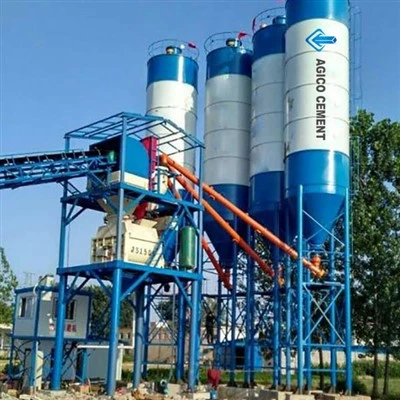
AGICO CEMENT configures the CP30 for projects that need a nominal 30 m³/h duty without allocating space for a high-output plant. Its layout connects aggregate handling, material metering, powder and water supply, mixing, and dispatch within one planned production area.
The reference basis is approximately 0.5 m³ of compacted concrete in each batch. This batch volume does not guarantee a fixed hourly result: recipe requirements, charging continuity, mixing duration, operator settings, and the discharge cycle determine the production achieved on site.
Why Project Teams Choose the CP30
Configuration Starts With the Production Brief
AGICO's site-conscious equipment arrangement
AGICO's coordinated arrangement helps planners zone material delivery, production, and concrete dispatch where the available plot or access route is restricted. The final equipment position is developed from the actual site plan rather than a generic footprint.
The recipe control sequence of AGICO CEMENT
The recipe control sequence of AGICO CEMENT calls for each approved material in the required order and records the corresponding weighing stage. Instrument range, operating mode, and optional control functions are fixed only after the mix designs and project interface are reviewed.

Material Flow
From Raw Materials to Fresh Concrete
The CP30 coordinates weighing, conveying, mixing, and discharge as one controlled batching sequence.
Aggregate Feeding
Separated aggregates are discharged according to the selected recipe and measured before transfer to the mixer.
Powder and Liquid Dosing
Cement is conveyed from storage while water and approved admixtures are measured separately.
Mixing and Discharge
The selected mixer completes the batch before concrete is released to the receiving vehicle or equipment.

Plant Configuration

Matching Storage, Dosing, Mixing, and Dispatch
The CP30 is engineered as a set of connected interfaces: aggregate storage feeds the weighing section, measured materials move to the mixer, and the discharge arrangement serves the selected receiving vehicle or downstream equipment.
A pan, planetary, or twin-shaft mixer may be evaluated for the plant. Selection follows the concrete family, maximum aggregate size, batch-volume basis, uniformity target, discharge method, and the cleaning routine available to the operator.
Applications
A CP30 application should be checked against the required shift volume, aggregate and cement supply plan, utility capacity, truck movement, and the distance between mixing and placement.

BUILDING PROJECTS
For building work, the CP30 can place batching near the active construction area when aggregate storage, delivery access, washout management, and concrete dispatch have defined routes.

ROAD AND BRIDGE WORK
Civil packages such as road or bridge work may use a local CP30 supply point when material replenishment and haul cycles can maintain the pour sequence specified by the project.

SMALL READY-MIX PRODUCTION
In a small ready-mix yard, the 30 m³/h class is assessed from daily order patterns, peak dispatch demand, cement and aggregate reserves, mixer choice, and the available electrical and water services.

SELECTED PRECAST WORK
For selected precast duties, suitability depends on whether the chosen mixer, weighing ranges, moisture-control practice, and discharge interface can serve the approved element recipes.
Engineering Inputs Before Final Selection

Define the Duty, Materials, and Site Interfaces
For an engineering review, provide the hourly and shift demand, each concrete recipe, aggregate fractions and maximum size, available cement storage, plot dimensions, voltage and frequency, receiving vehicle, local environmental controls, and the intended operating schedule. AGICO will use these inputs to prepare the configuration basis for a technical proposal.
Hot Tags: cp30 batching plant, China cp30 batching plant manufacturers, factory
Technical Parameters
| Parameter | CP30 Reference Value / Selection Basis |
| Model | CP30 |
| Nominal output | 30 m³/h |
| Reference compacted concrete per batch | Approx. 0.5 m³ |
| Reference mixer filling / compacted volume | 0.75 / 0.5 m³ |
| Reference discharge height | Approx. 4.1–4.2 m |
| Referenced AG-CP30 material storage | 20 m³ |
| Material weighing | Digital load-cell system |
| Aggregate feeding | Inclined belt in the referenced AG-CP30 configuration |
| Cement feeding | Screw conveyor |
| Water dosing | Separately weighed |
| Control | Automatic PLC-based control |
| Reference connected power | 63 HP |
| Reference generator recommendation | 82 kVA |
| Mixer option | Selected from concrete recipe and project requirements |
| Aggregate compartments | Selected from aggregate fractions |
| Voltage and frequency | Configured for the project power supply |
| Foundation and dimensions | Confirmed from final equipment layout |
Selection Note
The table uses 30 m³/h as a nominal selection class and records reference values rather than a universal supply list. AGICO confirms the mixer, storage volumes, weighing ranges, motor ratings, electrical standard, foundation loads, overall dimensions, and optional equipment against the submitted project data.
Request a CP30 Technical Proposal
FAQ
Is the CP30 output always exactly 30 m³/h?
No. The 30 m³/h figure is the nominal plant class. Site production changes with batch volume, recipe requirements, charging continuity, mixing duration, discharge timing, and operator practice.
Which mixer can be used with the CP30 plant?
Pan, planetary, or twin-shaft options may be considered. AGICO selects the mixer after reviewing the concrete type, aggregate, and required batch quality.
How many aggregate bins are required?
The number depends on the aggregate fractions in the approved recipe. Bin quantity and storage volume are confirmed during technical design.
Which project details should be included in an inquiry?
Include the hourly and daily demand, mix designs, aggregate fractions and size, cement-storage requirement, plot drawing, voltage and frequency, discharge arrangement, environmental limits, and target operating date.