



Product Description

Direct Contact Heating for Continuous Processing
Typical Applications
Our latest projects
Shanghai Jwell machinery Workshop co-operation projects

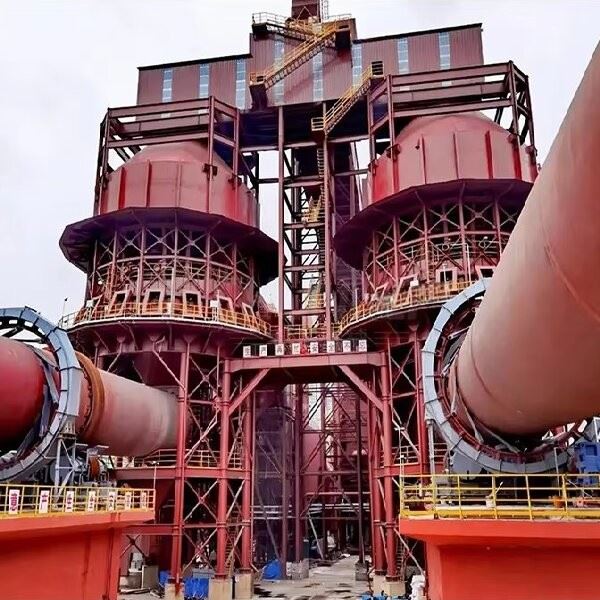
Mineral Calcination
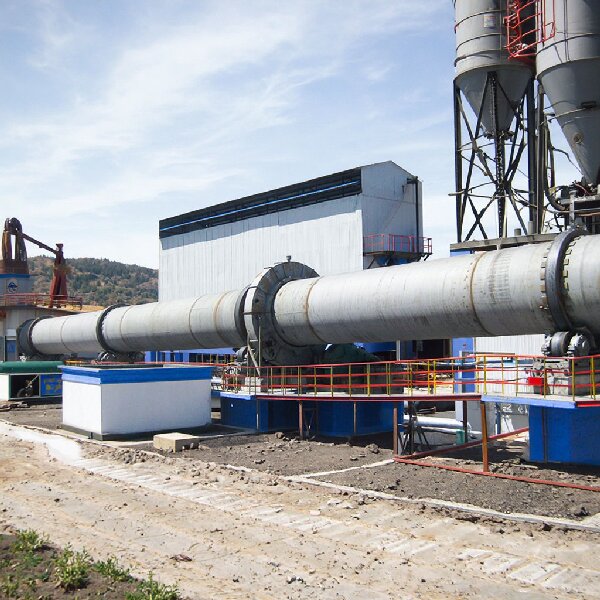
Ore Roasting

Bulk-Solids Thermal Treatment
Working Principle
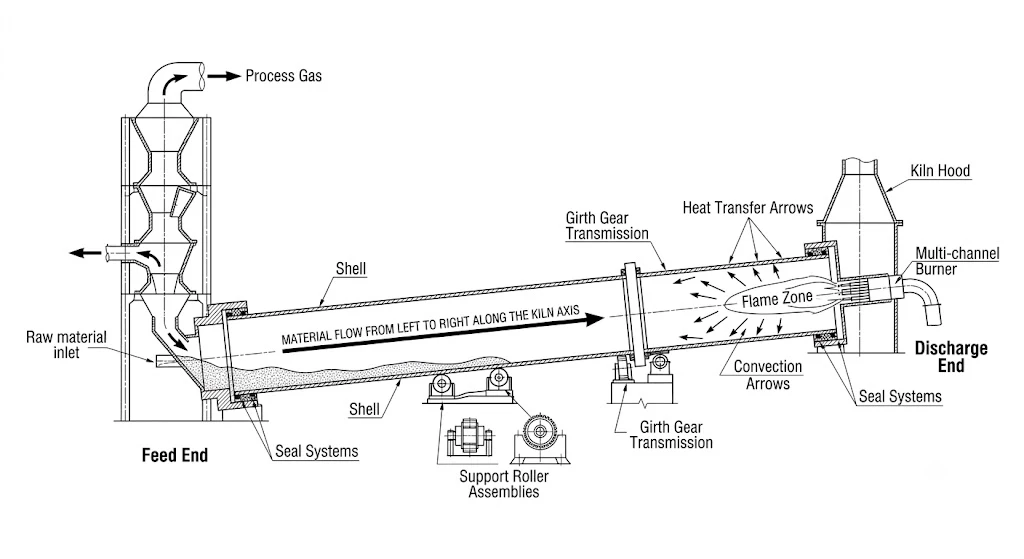
From Feed Entry to Controlled Discharge
Feed and Preheating
Prepared material enters the elevated end and begins heating as the shell rotates.
Direct Heat Transfer
Radiation, convection, and contact with combustion gases raise the material to the target temperature.
Controlled Reaction
Residence time and the thermal profile support the required calcination, roasting, or phase change.
Discharge and Gas Handling
Processed solids leave the kiln while exhaust gas moves to the specified collection and treatment system.
Product Advantages
Why Choose Us?
Controlled Material Movement
Shell speed, inclination, internals, and fill level are coordinated with the required residence time.
Flexible Gas Flow
Co-current or counter-current flow is selected according to feed sensitivity and the required thermal profile.
Purpose-Matched Refractory
Lining materials are selected for temperature, abrasion, chemical attack, and thermal cycling.
Integrated Process Control
Feed rate, burner operation, draft, temperature, and discharge conditions are managed as one system.
Main System Components
that's our services
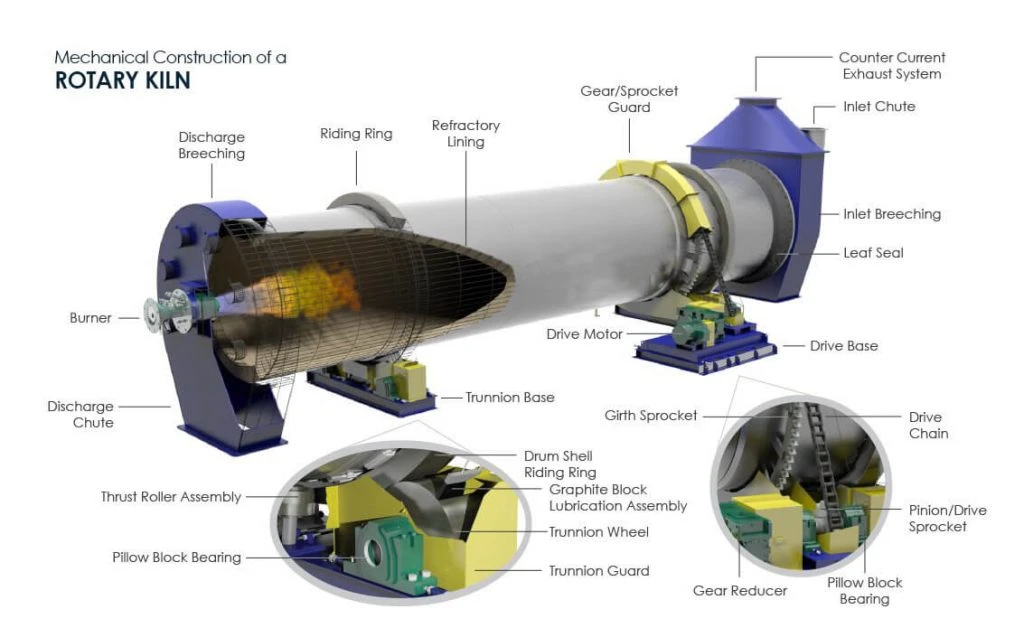
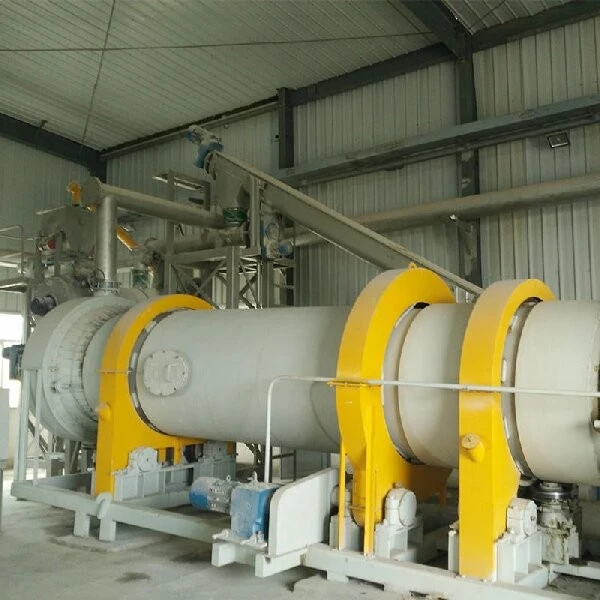
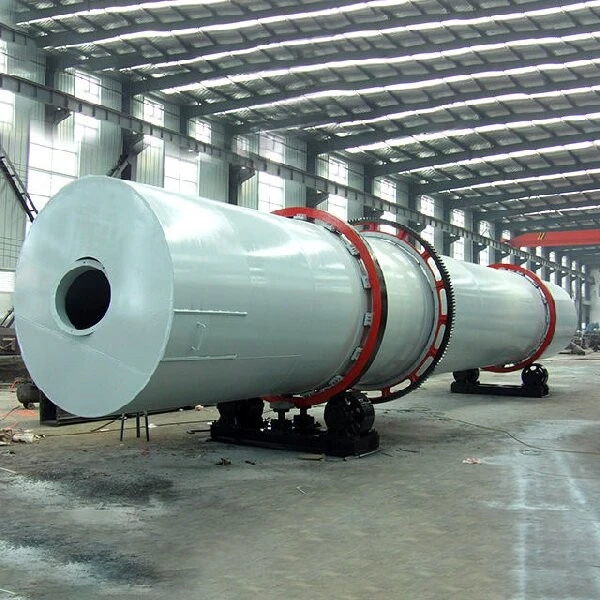
Kiln Shell and Refractory
Support and Drive
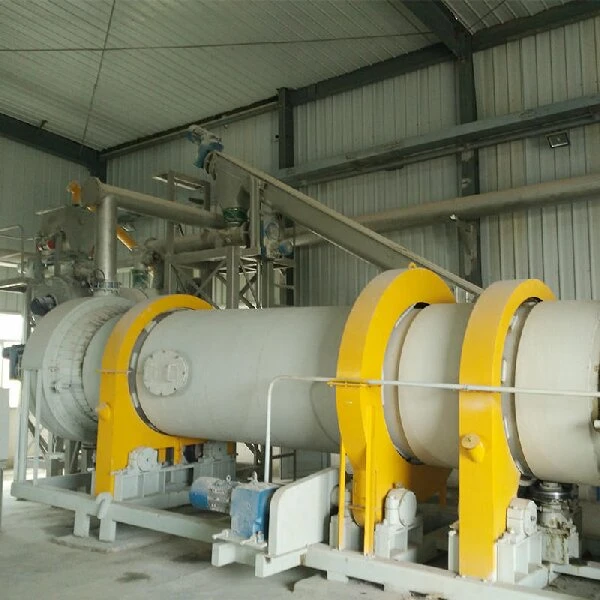

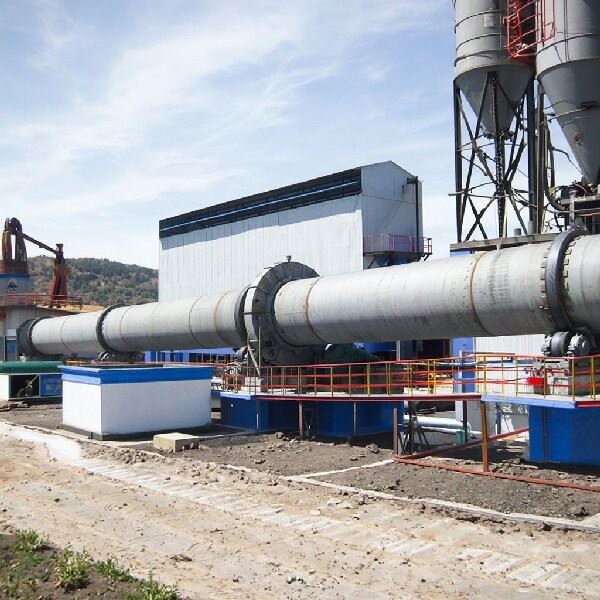
Burner and Kiln Hood
Seals and Off-Gas Path
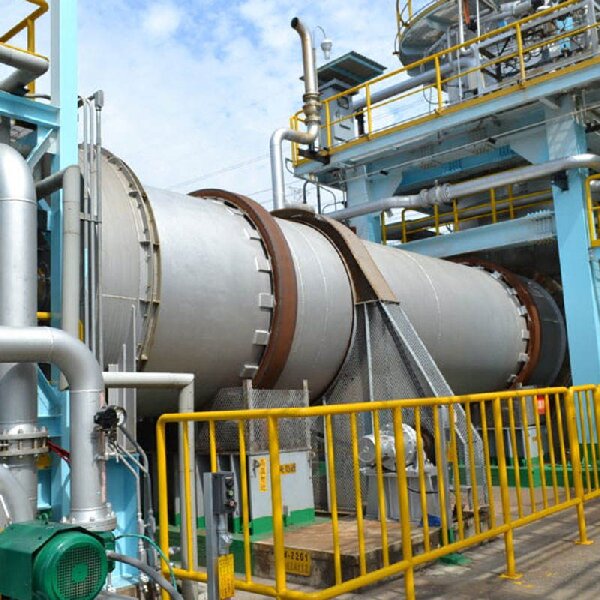
Engineering Selection
Inputs That Define the Furnace
Provide representative feed data
1
>>
Confirm throughput and product target
2
>>
Define temperature and residence time
3
>>
Review fuel and available utilities
4
>>
Specify gas and emission limits
5
>>
Confirm supply boundary and site conditions
6
Hot Tags: direct fired furnace, China direct fired furnace manufacturers, factory, calcination kiln of dolomite, rotary kiln calciner, suspension preheater, used rotary kiln, vertical shaft kiln technology for cement, wet process cement kiln
Technical Parameters
| Selection Item | Published Market Reference |
| Medium-temperature duties | Approximately 850-950 °C |
| Higher-temperature duties | Approximately 1300-1400 °C |
| Published shell diameter | Up to approximately 4.6 m |
| Published heated length | Up to approximately 23 m or longer |
| Gas-flow arrangement | Co-current or counter-current |
| Key sizing inputs | Feed rate, residence time, temperature, speed, slope, fill level, and airflow |
Preliminary Reference
The above data is provided for preliminary reference only. Actual plant capacity, mixer configuration, storage volume, power demand, discharge height, control functions, and overall dimensions must be confirmed according to your concrete recipes, site conditions, utilities, operating schedule, and specific project requirements.
FAQ
What is the difference between direct-fired and indirect-fired rotary furnaces?
+
-
A direct-fired furnace brings solids into contact with combustion gases. An indirect-fired unit transfers heat through the shell and separates the material from the heating gases.
Can one furnace process different materials?
+
-
A kiln may handle a defined feed range, but changes in chemistry, moisture, particle size, or reaction behavior can require different settings or mechanical configurations.
Should the kiln use co-current or counter-current flow?
+
-
The choice depends on feed sensitivity, temperature profile, off-gas conditions, and the required product discharge temperature.
How is furnace capacity determined?
+
-
Capacity follows from material test data, bulk density, reaction kinetics, residence time, fill level, shell geometry, temperature profile, and gas-flow conditions.


