

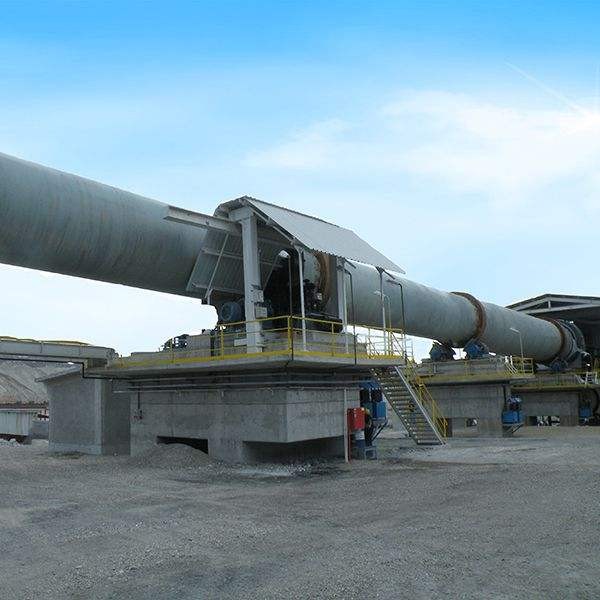
Product Description
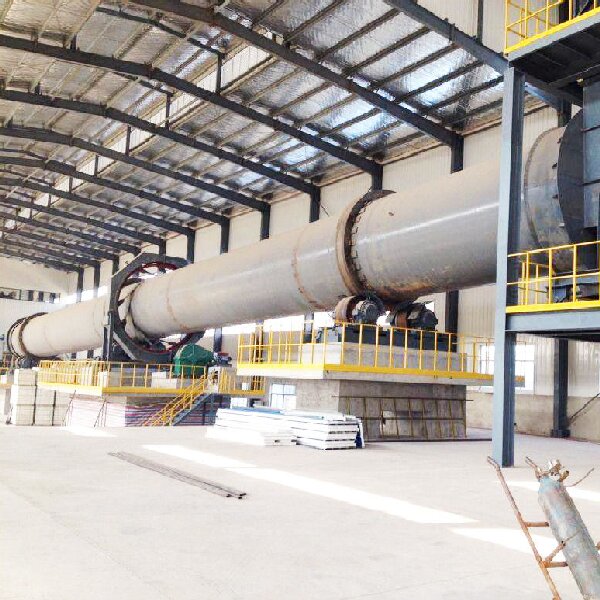
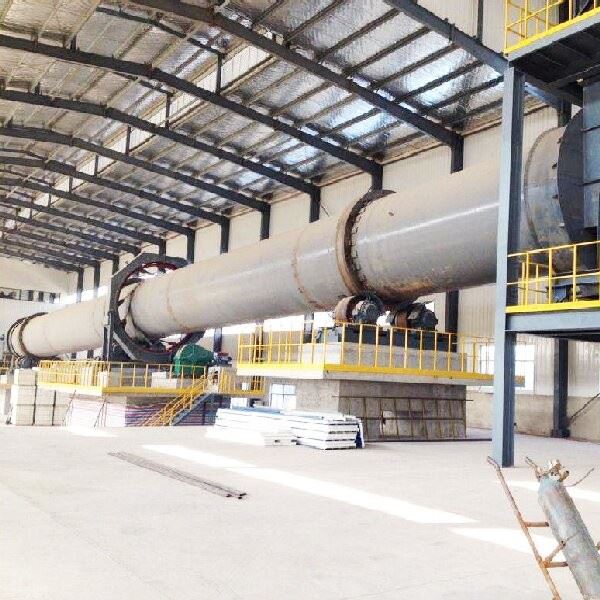
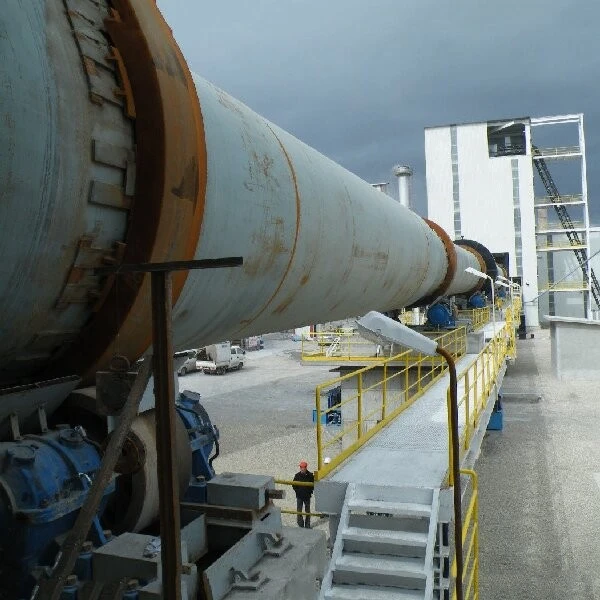
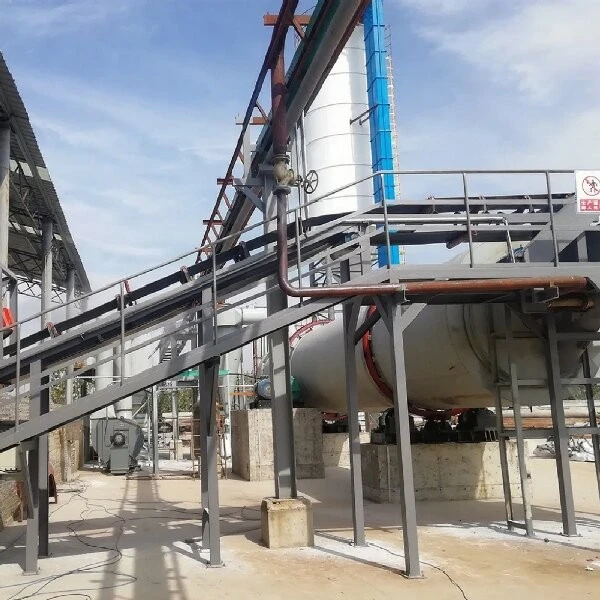
A Horizontal Kiln Engineered Around the Process
Product Advantages
Four Engineering Priorities for a Horizontal Kiln
Continuous Material Movement
Effective Heat Transfer
Adaptable Process Configuration
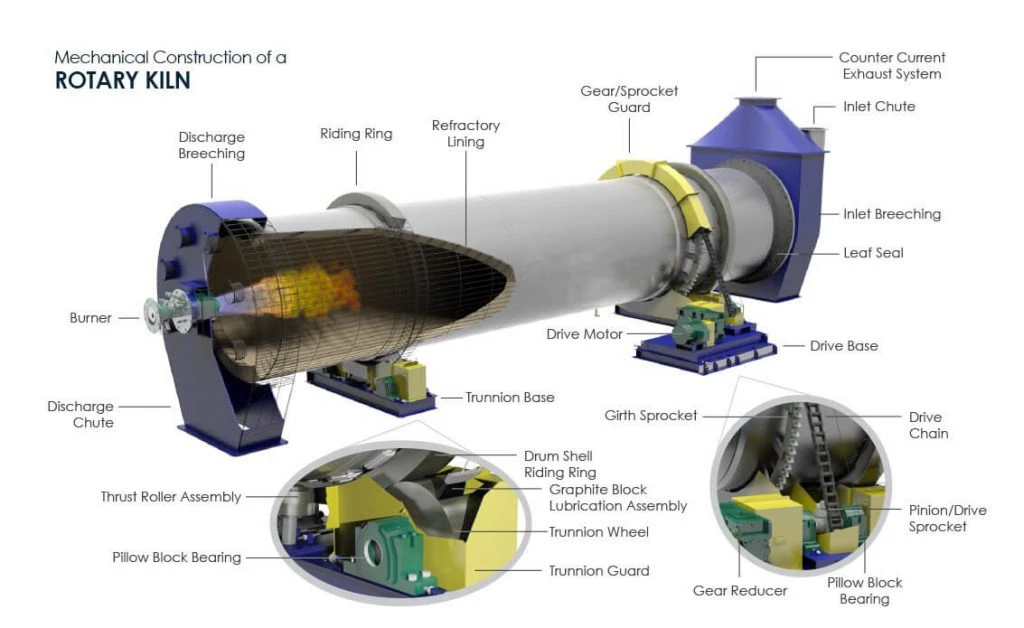
Serviceable Mechanical Structure
Working Process
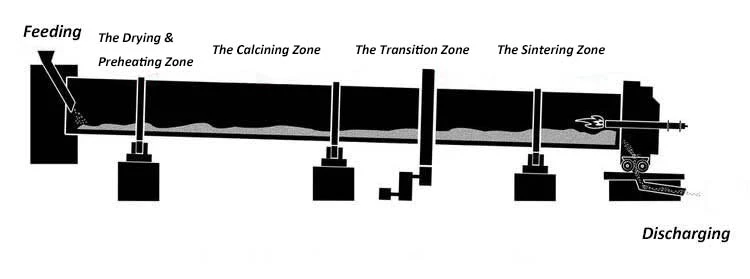
From Prepared Feed to Controlled Discharge
Metered Feeding
Prepared feed enters the elevated end at a controlled rate. Feed composition, particle size, moisture and bulk behavior are confirmed before final sizing.
Rolling and Axial Travel
Shell rotation forms a rolling bed, while the slight inclination moves the material gradually through the kiln.
Controlled Thermal Treatment
Temperature, draft, heating input, feed rate and rotational speed are coordinated within the approved operating window.
Discharge and Gas Handling
Processed material leaves for cooling or downstream conveying, while exhaust gas is routed to the specified heat-recovery or cleaning system.
Selection Inputs
Information Required for Kiln Selection
Material chemistry and moisture
1
>>
Particle size and bulk behavior
2
>>
Target product and reaction
3
>>
Required net output and schedule
4
>>
Heating source and atmosphere
5
>>
Site utilities and emission basis
6
Hot Tags: horizontal kiln, China horizontal kiln manufacturers, factory, 100 tpd sponge iron kiln process, annular shaft kiln, cement kiln for sale, rotary kiln dryer, sponge iron rotary kiln, vsk kiln
Technical Parameters
| Model | Dia. | Length | Capacity | Motor |
| Φ2.5 × 40 | 2.5 m | 40 m | 180 t/d | 55 kW |
| Φ2.5 × 50 | 2.5 m | 50 m | 200 t/d | 55 kW |
| Φ2.5 × 54 | 2.5 m | 54 m | 280 t/d | 55 kW |
Final parameters are determined according to the customer's material, required capacity, process conditions, customization requirements, and construction or site conditions. Contact our professional team for a project-specific configuration.
Discuss Your Horizontal Kiln Project
FAQ
Is every horizontal kiln a cement kiln?
+
-
No. Horizontal rotary kilns can support different drying, calcination, roasting, or thermal-treatment duties. The lining, heating method, seals, and gas system must match the specific material and reaction.
Can kiln capacity be selected from diameter alone?
+
-
No. Capacity also depends on material properties, gas flow, filling level, residence time, temperature profile, and the performance of upstream and downstream equipment.
How is material residence time adjusted?
+
-
Residence behavior is influenced by shell length, inclination, rotational speed, feed properties, and internal configuration. These variables are evaluated together during process design.
What equipment can be supplied with the kiln?
+
-
The project scope may include feeding, combustion or heating, sealing, cooling, conveying, exhaust-gas treatment, and control equipment. The final scope follows the process and site requirements.
What should be sent with an inquiry?
+
-
Provide feed analysis, particle size, moisture, required capacity, target product, process temperature, energy source, operating hours, project location, and available site layout.


