Can a special ball mill be used for metal powder production? This is a question that many in the manufacturing and materials science industries often ponder. As a supplier of special ball mills, I am well - versed in the capabilities and applications of these remarkable machines, and I'm excited to delve into this topic.
Understanding Special Ball Mills
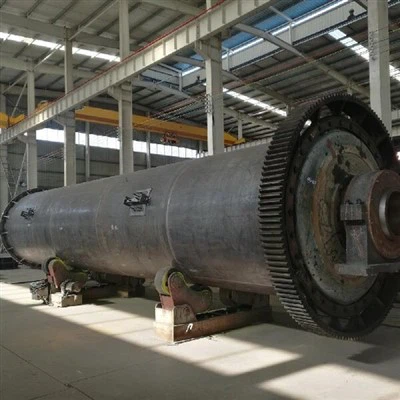
Special ball mills come in various types, each designed to meet specific industrial needs. For instance, the Semi Autogenous Grinding Mill is a unique type that uses large rocks and ore particles as part of the grinding media. This self - sustaining nature reduces the need for additional grinding media, making it a cost - effective option for large - scale operations.
Another type is the High Energy Ball Milling machine. As the name suggests, it operates at high energies, which can lead to rapid and efficient particle size reduction. The high - energy environment can also induce mechanical alloying, a process where different metals are combined at the atomic level during the milling process.
The Rod Mill Machine is yet another special ball mill. Instead of using balls as the grinding media, it uses long rods. This design results in a more uniform particle size distribution, which is beneficial for certain applications.


Metal Powder Production Requirements
Producing high - quality metal powders requires precise control over several factors. Particle size is one of the most critical parameters. Depending on the end - use of the metal powder, the particle size can range from a few micrometers to several millimeters. For example, metal powders used in additive manufacturing often require a narrow particle size distribution in the micrometer range to ensure smooth printing and high - quality finished products.
Purity is another important consideration. Contaminants in metal powders can significantly affect the properties of the final product. For instance, in the aerospace industry, where metal components need to have high strength and fatigue resistance, even a small amount of impurities in the metal powder can lead to catastrophic failures.
Special Ball Mills in Metal Powder Production
Special ball mills offer several advantages when it comes to metal powder production. Firstly, they can achieve a wide range of particle sizes. The High Energy Ball Milling machine, with its intense mechanical forces, can break down large metal chunks into fine powders with particle sizes in the nanometer to micrometer range. This is particularly useful for producing metal powders for applications such as catalysis, where high surface area (associated with small particle sizes) is desirable.
The ability to control the milling process is another benefit. In a Semi Autogenous Grinding Mill, the ratio of the ore to the grinding media can be adjusted to optimize the grinding efficiency and particle size. Operators can also control the milling time, rotation speed, and other parameters to fine - tune the properties of the resulting metal powder.
In terms of purity, special ball mills can be designed to minimize contamination. For example, the grinding media can be made from materials that are chemically inert to the metal being milled. Additionally, the mills can be equipped with advanced sealing systems to prevent the ingress of external contaminants.
Case Studies
Let's take a look at some real - world examples of how special ball mills are used in metal powder production. In a research laboratory working on developing new battery materials, a High Energy Ball Milling machine was used to produce lithium - based metal powders. The high - energy milling process not only reduced the particle size of the lithium compounds but also induced a phase transformation that improved the electrochemical performance of the resulting battery electrodes.
In a large - scale mining operation, a Semi Autogenous Grinding Mill was employed to produce copper powder. The mill was able to handle large volumes of copper ore and reduce it to a suitable particle size for further processing. The self - sustaining nature of the mill reduced the overall production cost and increased the efficiency of the operation.
Challenges and Limitations
While special ball mills offer many benefits for metal powder production, they also face some challenges. One of the main challenges is the high energy consumption, especially in High Energy Ball Milling machines. The intense mechanical forces require a significant amount of power, which can increase the production cost and have environmental implications.
Another limitation is the potential for contamination during the milling process. Even with the best - designed mills, there is always a risk of introducing contaminants from the grinding media or the mill itself. This requires strict quality control measures and regular maintenance of the equipment.
Overcoming Challenges
To address the energy consumption issue, researchers are exploring ways to optimize the design of special ball mills. For example, new materials for the grinding media are being developed that can achieve the same grinding efficiency with less energy input. Additionally, advanced control systems are being implemented to adjust the milling parameters in real - time based on the material properties, further reducing energy waste.
To minimize contamination, manufacturers are using high - purity grinding media and improving the sealing and cleaning procedures of the mills. Regular inspection and maintenance of the mills can also help identify and address potential sources of contamination before they affect the quality of the metal powder.
Conclusion
In conclusion, special ball mills can indeed be used for metal powder production. Their ability to control particle size, induce mechanical alloying, and offer a high degree of process control makes them well - suited for this application. However, like any technology, they also face challenges such as high energy consumption and potential contamination. By addressing these challenges through technological advancements and strict quality control measures, special ball mills can continue to play a crucial role in the production of high - quality metal powders.
If you are in the market for high - performance special ball mills for your metal powder production needs, I encourage you to reach out to us. We have a team of experts who can provide you with detailed information about our products and help you select the most suitable special ball mill for your specific requirements. Contact us today to start a discussion about how our special ball mills can enhance your metal powder production process.
References
- "Powder Metallurgy: Principles and Applications" by Randall M. German.
- "Mechanical Alloying and Milling" by C. Suryanarayana.
- "Handbook of Metal Powders: Science, Technology and Applications" edited by J. F. Walter.