As a seasoned kiln material supplier, I've witnessed firsthand the critical role that the choice of kiln materials plays in various industrial processes. Among the numerous options, dry - pressed and extruded kiln materials stand out, each with its own unique characteristics. In this blog, I'll delve into the differences between these two types of kiln materials to help you make an informed decision for your specific needs.
Manufacturing Process
The fundamental difference between dry - pressed and extruded kiln materials lies in their manufacturing processes.
Dry - pressed kiln materials are produced by compressing a dry powder mixture in a mold under high pressure. The powder is typically a blend of raw materials such as refractory oxides, binders, and additives. Once the powder is placed in the mold, a hydraulic press applies a significant amount of pressure, forcing the particles to bond together. This process results in a dense and uniform structure. The high - pressure compaction ensures that the material has excellent dimensional stability, making it suitable for applications where precise shapes and sizes are required.
On the other hand, extruded kiln materials are made by forcing a plastic or semi - plastic mixture through a die. The mixture is usually a combination of raw materials and a liquid binder, which gives it the necessary plasticity. The extrusion process is similar to squeezing toothpaste out of a tube. As the mixture passes through the die, it takes on the shape of the die opening. This method allows for the production of long, continuous shapes such as rods, tubes, and profiles. Extrusion can also create complex cross - sectional shapes that may be difficult or impossible to achieve with dry - pressing.
Physical Properties
Density
Dry - pressed kiln materials generally have a higher density compared to extruded ones. The high - pressure compaction in the dry - pressing process eliminates most of the voids between the particles, resulting in a more solid and dense material. This high density gives dry - pressed materials excellent strength and resistance to wear and tear. For example, in applications where the kiln materials are exposed to high - velocity gas flow or abrasive particles, dry - pressed materials can withstand the harsh conditions better.
Extruded kiln materials, due to their manufacturing process, may have a slightly lower density. The presence of some voids in the structure can make them lighter in weight. This lower density can be an advantage in certain applications where weight reduction is a priority, such as in mobile kilns or in applications where the kiln structure needs to support the materials with less load.
Porosity
Porosity is another important physical property that differs between dry - pressed and extruded kiln materials. Dry - pressed materials typically have low porosity because of the high - pressure compaction. Low porosity means that the material is less permeable to gases and liquids. This is beneficial in applications where the kiln needs to maintain a specific atmosphere, as it reduces the leakage of gases and prevents the ingress of contaminants.
Extruded materials may have a relatively higher porosity. The plastic mixture used in extrusion can trap some air bubbles during the process, leading to the formation of small pores. However, this higher porosity can also provide some advantages. For example, in applications where the kiln materials need to absorb and release moisture or gases during the heating and cooling cycles, the higher porosity can facilitate these processes.
Strength
In terms of strength, dry - pressed kiln materials usually have superior compressive strength. The dense structure and strong particle bonding achieved through high - pressure compaction enable them to withstand high compressive forces without deforming or breaking. This makes them ideal for applications where the kiln materials are subjected to heavy loads, such as in the bottom layers of large industrial kilns.
Extruded materials may have lower compressive strength compared to dry - pressed ones, but they can have good tensile and flexural strength. The continuous nature of the extruded shapes and the orientation of the particles during the extrusion process can give them better resistance to bending and stretching forces. This property is useful in applications where the kiln materials need to withstand dynamic stresses, such as in vibrating kilns or in kilns with moving parts.
Chemical Resistance
The chemical resistance of kiln materials is crucial, especially in applications where they come into contact with corrosive substances. Dry - pressed kiln materials, with their low porosity and dense structure, generally offer better chemical resistance. The lack of pores reduces the surface area available for chemical reactions, and the strong particle bonding makes it more difficult for corrosive agents to penetrate the material. For example, in kilns used for the production of chemicals or in environments with high - acid or high - alkali content, dry - pressed materials can provide long - term protection.
Extruded kiln materials may have slightly lower chemical resistance due to their relatively higher porosity. However, the choice of raw materials and the addition of appropriate additives during the manufacturing process can enhance their chemical resistance. For instance, using corrosion - resistant binders or incorporating special coatings can improve the ability of extruded materials to withstand chemical attacks.
Thermal Properties
Thermal Conductivity
Thermal conductivity is an important consideration in kiln applications, as it affects the energy efficiency and temperature distribution within the kiln. Dry - pressed kiln materials often have a higher thermal conductivity because of their dense structure. The closely packed particles allow heat to transfer more easily through the material. This can be an advantage in applications where rapid heat transfer is required, such as in some high - temperature heating processes.
Extruded kiln materials may have a lower thermal conductivity. The presence of pores in the structure acts as an insulator, reducing the rate of heat transfer. This property can be beneficial in applications where heat retention is important, such as in slow - heating kilns or in kilns where energy conservation is a priority.
Thermal Expansion
Thermal expansion is the tendency of a material to expand or contract when subjected to temperature changes. Dry - pressed kiln materials usually have a relatively low coefficient of thermal expansion. The high - pressure compaction and the uniform structure result in a more stable material that undergoes less dimensional change with temperature variations. This is important in applications where precise dimensional control is required, as it helps to prevent cracking and damage to the kiln components.
Extruded materials may have a slightly higher coefficient of thermal expansion. The orientation of the particles and the presence of pores can cause the material to expand and contract more significantly with temperature changes. However, this can be managed through proper design and the use of expansion joints in the kiln structure.
Applications
The differences in physical, chemical, and thermal properties between dry - pressed and extruded kiln materials make them suitable for different applications.
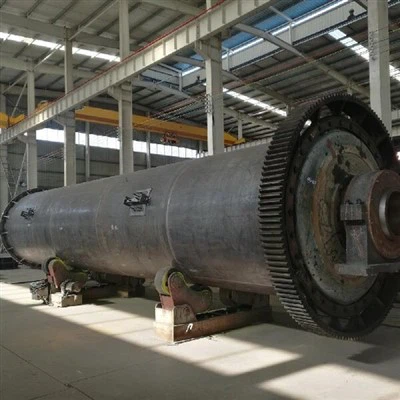
Dry - pressed kiln materials are commonly used in applications where high strength, low porosity, and good chemical resistance are required. They are widely used in the lining of large industrial kilns, such as Professional Cement Rotary Kiln. In cement production, the kiln operates at high temperatures and is exposed to abrasive clinker and corrosive gases. Dry - pressed materials can withstand these harsh conditions and provide long - term performance. They are also used in the construction of furnace bottoms, where they need to support heavy loads and resist wear from the molten materials.
Extruded kiln materials are preferred in applications where complex shapes, light weight, and good thermal insulation are needed. They are often used in the production of Limestone Rotary Kiln components. The ability to produce long, continuous shapes makes them suitable for lining the cylindrical sections of the kiln. Extruded materials are also used in the manufacturing of kiln furniture, such as shelves and supports, where their light weight and good flexural strength are advantageous. Additionally, in Calcination Kiln Of Dolomite, extruded materials can be used to create custom - shaped components that are tailored to the specific requirements of the calcination process.
Conclusion
In conclusion, the choice between dry - pressed and extruded kiln materials depends on a variety of factors, including the specific application, the required physical and chemical properties, and the budget. As a kiln material supplier, I understand the importance of providing the right materials to meet your needs. Whether you need high - strength dry - pressed materials for heavy - duty applications or lightweight extruded materials for custom - shaped components, I can offer a wide range of options.


If you're in the process of selecting kiln materials for your project, I encourage you to reach out to me. We can discuss your specific requirements in detail and find the most suitable solution for your kiln. Don't hesitate to contact me for more information or to start a procurement discussion.
References
- "Refractory Materials Handbook" - A comprehensive guide on the properties and applications of various refractory materials.
- "Industrial Kiln Design and Operation" - This book provides insights into the design and operation of different types of industrial kilns and the role of kiln materials.
- Research studies on the manufacturing processes and properties of dry - pressed and extruded kiln materials published in leading ceramic and materials science journals.