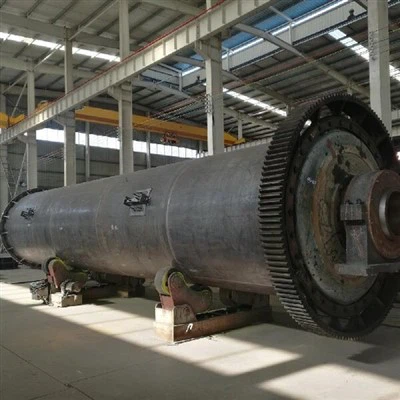
Gypsum rotary kilns are essential equipment in the gypsum processing industry, used for calcining gypsum into plaster of Paris or anhydrite. To ensure efficient, stable, and safe operation, a variety of control systems are employed. As a gypsum rotary kiln supplier, I'd like to share some insights into the control systems commonly used in these kilns.
Temperature Control System
Temperature is a critical parameter in the gypsum calcination process. Different types of gypsum require specific temperature ranges for optimal calcination. For example, the conversion of dihydrate gypsum (CaSO₄·2H₂O) to hemihydrate gypsum (CaSO₄·0.5H₂O) typically occurs at around 120 - 180°C, while the formation of anhydrite (CaSO₄) requires higher temperatures, usually above 300°C.
The temperature control system in a gypsum rotary kiln consists of temperature sensors, controllers, and actuators. Thermocouples or resistance temperature detectors (RTDs) are commonly used as temperature sensors. These sensors are strategically placed along the length of the kiln to monitor the temperature at different positions. The measured temperature signals are then transmitted to the controller, which compares them with the setpoint temperatures.
Based on the comparison results, the controller sends control signals to the actuators. In most cases, the actuators are burners that supply heat to the kiln. By adjusting the fuel flow rate and the air - fuel ratio, the controller can precisely control the temperature inside the kiln. For example, if the measured temperature is lower than the setpoint, the controller will increase the fuel flow rate to raise the temperature. Conversely, if the temperature is too high, the fuel flow will be reduced.
Speed Control System
The rotational speed of the gypsum rotary kiln affects the residence time of the gypsum material inside the kiln, which in turn influences the calcination process. A proper rotational speed ensures that the gypsum is evenly heated and calcined throughout the kiln.
The speed control system typically includes a variable - frequency drive (VFD) and an electric motor. The VFD allows for precise adjustment of the motor's speed. The operator can set the desired rotational speed according to the type of gypsum, the kiln size, and the production requirements.
For instance, when processing a large quantity of gypsum with a relatively low reactivity, a slower rotational speed may be selected to provide a longer residence time for complete calcination. On the other hand, for highly reactive gypsum, a higher speed can be used to increase the production rate. The VFD continuously monitors the motor speed and adjusts the frequency of the electrical power supplied to the motor to maintain the set speed.
Feed Rate Control System
The feed rate of gypsum into the rotary kiln is another important factor that needs to be controlled. An appropriate feed rate ensures a stable and continuous calcination process. If the feed rate is too high, the gypsum may not be fully calcined, resulting in poor product quality. Conversely, a very low feed rate may lead to inefficient use of energy and reduced production capacity.
The feed rate control system usually consists of a feeder, a flow sensor, and a controller. Belt feeders, screw feeders, or vibrating feeders are commonly used to transport the gypsum into the kiln. A flow sensor, such as a weigh - belt feeder or an electromagnetic flow meter, is used to measure the actual feed rate.
The measured feed rate is then sent to the controller, which compares it with the set feed rate. If there is a deviation, the controller adjusts the feeder's operation. For example, if the feed rate is lower than the set value, the controller may increase the speed of the feeder motor to deliver more gypsum.
Pressure Control System
Maintaining the correct pressure inside the gypsum rotary kiln is crucial for several reasons. A proper pressure ensures good ventilation and heat transfer, and it also prevents the leakage of hot gases and dust from the kiln.
The pressure control system includes pressure sensors, controllers, and dampers. Pressure sensors, such as differential pressure transmitters, are installed at different locations in the kiln, including the inlet and the outlet. These sensors measure the pressure differences and transmit the signals to the controller.
The controller compares the measured pressure with the set pressure. Based on the comparison, it sends control signals to the dampers. Dampers are adjustable valves that can regulate the flow of air and gases in and out of the kiln. If the pressure inside the kiln is too high, the controller will open the dampers to release the excess pressure. Conversely, if the pressure is too low, the dampers will be adjusted to increase the pressure.


Other Related Rotary Kilns
In addition to gypsum rotary kilns, there are other types of rotary kilns used in different industries. For example, the Sludge Incineration Kiln is used for the incineration of sludge, which helps in reducing the volume of sludge and recovering energy. The Calcium Aluminate Rotary Kiln is employed in the production of calcium aluminate, a key material in the refractory and cement industries. The Portland Cement Kiln is crucial for the production of Portland cement, one of the most widely used construction materials.
Conclusion and Contact
In conclusion, the control systems in a gypsum rotary kiln play a vital role in ensuring efficient, high - quality, and safe operation. Temperature, speed, feed rate, and pressure control systems work together to optimize the calcination process. As a gypsum rotary kiln supplier, we have extensive experience in designing and implementing these control systems to meet the diverse needs of our customers.
If you are interested in our gypsum rotary kilns or have any questions about the control systems, we encourage you to contact us for a detailed discussion. Our team of experts is ready to provide you with professional advice and customized solutions to help you achieve your production goals.
References
- Perry, R. H., & Green, D. W. (Eds.). (1997). Perry's Chemical Engineers' Handbook. McGraw - Hill.
- Schwedes, J. (2004). Handbook of Powder Science and Technology. Marcel Dekker.
- Lewis, R. W. (2004). Fundamentals of the Finite Element Method for Heat and Fluid Flow. Wiley.