As a supplier of crusher springs, I've witnessed firsthand the crucial role these components play in the efficient operation of crushing equipment. One of the most significant yet often misunderstood concepts related to crusher springs is hysteresis. In this blog, I'll delve into what hysteresis of a crusher spring is, why it matters, and how it impacts the performance of crushers.
Understanding Hysteresis in General
Before we dive into the specifics of crusher spring hysteresis, let's first understand what hysteresis means in a broader context. Hysteresis is a phenomenon where the output of a system depends not only on its current input but also on its past inputs. In simpler terms, it's the lag between the cause and the effect. This concept is widely observed in various fields, including physics, engineering, and materials science.
In the case of mechanical systems, hysteresis often manifests as energy loss during the loading and unloading cycles of a component. When a material is subjected to a force, it deforms. As the force is removed, the material may not return to its original shape immediately or completely. This difference between the loading and unloading curves is what we refer to as hysteresis.
Hysteresis of a Crusher Spring
A crusher spring is a vital part of a crushing machine, typically used to provide the necessary force to keep the crushing jaws or plates in contact with the material being crushed. It also helps to absorb shock and vibrations during the crushing process, protecting the machine from damage.
The hysteresis of a crusher spring refers to the energy loss that occurs when the spring is compressed and then released. When a force is applied to the spring, it compresses, storing potential energy. As the force is removed, the spring expands, releasing the stored energy. However, due to internal friction and other factors, not all of the stored energy is recovered. This energy loss is the hysteresis of the spring.
The hysteresis loop of a crusher spring can be visualized as a curve on a graph, with the force applied to the spring on the y - axis and the displacement of the spring on the x - axis. The area enclosed by the loop represents the energy loss during one loading and unloading cycle. A larger hysteresis loop indicates more energy loss, while a smaller loop means less energy loss.
Factors Affecting Crusher Spring Hysteresis
Several factors can influence the hysteresis of a crusher spring.
Material Properties
The type of material used to make the spring plays a significant role in determining its hysteresis. Different materials have different internal structures and mechanical properties, which affect how they deform and recover. For example, high - carbon steel springs may have different hysteresis characteristics compared to stainless steel springs. Materials with higher internal friction will generally have larger hysteresis loops, resulting in more energy loss.
Spring Design
The design of the spring, including its shape, size, and number of coils, also affects hysteresis. A spring with a more complex design or a larger number of coils may have more internal friction, leading to increased hysteresis. Additionally, the pitch of the coils and the diameter of the wire used in the spring can influence its hysteresis behavior.
Operating Conditions
The operating conditions of the crusher, such as the frequency of loading and unloading, the magnitude of the applied force, and the temperature, can also impact the hysteresis of the spring. High - frequency loading and unloading cycles can cause more wear and tear on the spring, increasing internal friction and hysteresis. Similarly, extreme temperatures can affect the mechanical properties of the spring material, altering its hysteresis characteristics.
Importance of Understanding Crusher Spring Hysteresis
Understanding the hysteresis of a crusher spring is crucial for several reasons.


Energy Efficiency
Energy loss due to hysteresis means that more energy is required to operate the crusher. By minimizing the hysteresis of the spring, we can improve the energy efficiency of the crushing process, reducing operating costs. For example, a crusher with a spring that has low hysteresis will require less power to achieve the same level of crushing performance.
Equipment Lifespan
Excessive hysteresis can lead to increased wear and tear on the spring and other components of the crusher. The energy loss is dissipated as heat, which can cause the spring to overheat and lose its mechanical properties over time. By reducing hysteresis, we can extend the lifespan of the spring and the overall crusher, reducing maintenance costs and downtime.
Crushing Performance
The hysteresis of the spring can also affect the crushing performance of the machine. A spring with consistent hysteresis characteristics will provide a more stable and predictable force during the crushing process, ensuring a more uniform particle size distribution of the crushed material.
Applications in Crusher Systems
In different types of crushers, the role of spring hysteresis varies.
Jaw Crushers
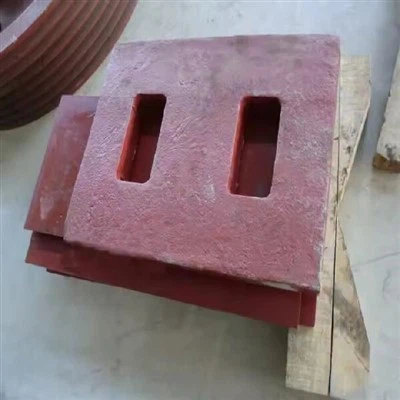
In jaw crushers, the spring is used to maintain the proper gap between the movable and fixed jaws. The hysteresis of the spring affects how the jaws respond to the force exerted by the material being crushed. A spring with appropriate hysteresis can help to absorb sudden shocks when large pieces of material enter the crushing chamber, preventing damage to the jaw Jaw Crusher Toggle Plate. It also ensures that the jaws close and open smoothly, improving the overall efficiency of the crushing process.
Impact Crushers
In impact crushers, the spring is often used to support the rotor and absorb vibrations. The hysteresis of the spring can influence the stability of the Impact Crusher Rotor during operation. A spring with the right hysteresis characteristics can help to dampen the vibrations caused by the impact of the material on the rotor, reducing noise and wear on the rotor bearings.
Measuring and Controlling Crusher Spring Hysteresis
To measure the hysteresis of a crusher spring, specialized testing equipment can be used. A universal testing machine can apply a controlled force to the spring and measure its displacement, allowing us to plot the hysteresis loop. By analyzing the shape and area of the loop, we can quantify the hysteresis of the spring.
Controlling the hysteresis of a crusher spring involves selecting the appropriate material, optimizing the spring design, and ensuring proper operating conditions. For example, using high - quality spring materials with low internal friction can reduce hysteresis. Additionally, designing the spring with an appropriate number of coils and wire diameter can also help to minimize energy loss.
Conclusion
In conclusion, the hysteresis of a crusher spring is an important concept that has a significant impact on the energy efficiency, equipment lifespan, and crushing performance of a crusher. As a supplier of crusher springs, we understand the importance of providing springs with low hysteresis to our customers. By carefully selecting materials, optimizing designs, and ensuring proper testing, we can offer springs that meet the specific needs of different crusher applications.
If you're in the market for high - quality crusher springs or other crusher parts such as Jaw Crusher Plate, we invite you to contact us for a detailed discussion. We are committed to providing the best products and solutions to enhance the performance of your crushing equipment.
References
- Callister, W. D., & Rethwisch, D. G. (2016). Materials Science and Engineering: An Introduction. Wiley.
- Shigley, J. E., Mischke, C. R., & Budynas, R. G. (2004). Mechanical Engineering Design. McGraw - Hill.