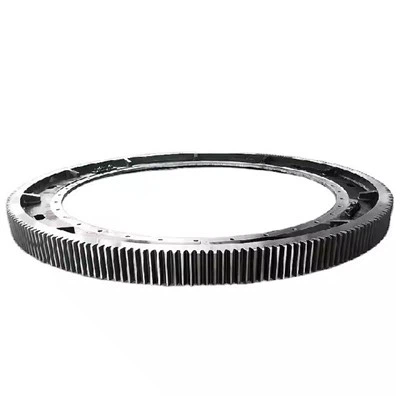
A kiln girth gear is a crucial component in the operation of rotary kilns, which are widely used in industries such as cement, mining, and metallurgy. The weight of a typical kiln girth gear can vary significantly depending on several factors, including its size, material, and design. In this blog, as a kiln girth gear supplier, I will delve into these factors and provide a comprehensive understanding of the weight of a typical kiln girth gear.
Factors Affecting the Weight of a Kiln Girth Gear
Size
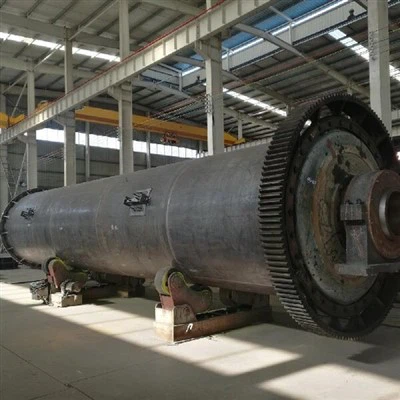
The size of a kiln girth gear is one of the primary factors influencing its weight. Kiln girth gears come in various diameters and widths to accommodate different kiln sizes and operational requirements. Larger kilns generally require larger girth gears, which naturally weigh more. For example, a small - scale rotary kiln used in a specialized laboratory setting might have a girth gear with a relatively small diameter, perhaps around 1 - 2 meters. In contrast, a large industrial cement kiln could have a girth gear with a diameter of 5 meters or more. As the diameter and width increase, the volume of the gear also increases, leading to a higher weight.
Material
The material used to manufacture the kiln girth gear also plays a significant role in determining its weight. Common materials for kiln girth gears include steel alloys, which are chosen for their strength, durability, and wear - resistance. Different steel alloys have different densities, and the choice of alloy can affect the weight of the gear. For instance, high - carbon steel has a relatively high density compared to some low - alloy steels. Additionally, the heat - treatment process applied to the steel can also influence its density and, consequently, the weight of the gear. Some advanced manufacturing techniques may use composite materials or special coatings to enhance the performance of the gear, but these can also add to or modify the overall weight.


Design
The design of the kiln girth gear can impact its weight. There are different tooth profiles and configurations available, such as involute teeth, which are commonly used for their smooth meshing and efficient power transmission. The number of teeth, the pitch of the teeth, and the overall structural design of the gear can all affect its weight. For example, a gear with a more complex tooth design or additional reinforcement features may weigh more than a simpler design. Moreover, the way the gear is attached to the kiln shell, whether it is a split - type or a one - piece design, can also contribute to the overall weight. Split - type girth gears are often used for ease of installation and maintenance, and their weight distribution may be different from that of one - piece gears.
Estimating the Weight of a Typical Kiln Girth Gear
To estimate the weight of a typical kiln girth gear, we can use some general guidelines based on industry standards. For a medium - sized industrial kiln with a girth gear diameter of around 3 - 4 meters and a width of 0.5 - 1 meter, made from a common steel alloy, the weight can range from 5 to 15 tons. However, this is just a rough estimate, and the actual weight can deviate significantly depending on the factors mentioned above.
Let's take a more detailed look at a specific example. Suppose we have a kiln girth gear with a diameter of 3.5 meters, a width of 0.8 meters, and is made of a medium - carbon steel alloy with a density of approximately 7850 kg/m³. First, we need to calculate the volume of the gear. Assuming the gear is a simple cylindrical shape (a basic approximation), the volume V of a cylinder is given by the formula V = πr²h, where r is the radius and h is the height (or width in this case). The radius r = 3.5/2 = 1.75 meters, and h = 0.8 meters. So, V = π×(1.75)²×0.8 ≈ 7.7 m³. Then, we can calculate the weight W using the formula W = ρV, where ρ is the density. Substituting the values, we get W = 7850×7.7 ≈ 60445 kg or approximately 60.4 tons. This is a simplified calculation, and in reality, the actual weight may be different due to the gear's tooth profile, internal structure, and other design features.
Importance of Knowing the Weight of a Kiln Girth Gear
Installation and Handling
Knowing the weight of the kiln girth gear is essential for proper installation and handling. Specialized lifting equipment, such as cranes, are required to move and position the gear during installation. The weight determines the capacity of the lifting equipment needed. If the weight is underestimated, it can lead to equipment failure during lifting, which can be dangerous and cause damage to the gear and the kiln. On the other hand, overestimating the weight may result in the use of overly large and expensive lifting equipment.
Structural Design of the Kiln
The weight of the kiln girth gear also affects the structural design of the kiln. The kiln shell and the support structures need to be designed to withstand the additional load imposed by the gear. Engineers need to consider the weight distribution and the dynamic forces acting on the kiln during operation. For example, the Support Roller for Rotary Kiln must be designed to support the combined weight of the kiln shell, the material inside the kiln, and the girth gear.
Maintenance and Replacement
During maintenance and replacement operations, the weight of the kiln girth gear is a crucial factor. Workers need to know the weight to plan the disassembly and reassembly processes safely. Additionally, if a replacement gear is required, the weight information helps in ensuring that the new gear is compatible with the existing kiln structure and lifting equipment.
Our Offerings as a Kiln Girth Gear Supplier
As a kiln girth gear supplier, we understand the importance of providing high - quality products with accurate weight specifications. We offer a wide range of Kiln Girth Gear options, customized to meet the specific needs of our customers. Our gears are manufactured using advanced production techniques and high - quality materials to ensure durability and optimal performance.
We have a team of experienced engineers who can assist in the selection of the right kiln girth gear based on your kiln size, operating conditions, and budget. We also provide detailed weight information for each of our products, along with other technical specifications, to help you make an informed decision.
In addition to kiln girth gears, we also supply related components such as Rotary Kiln Tyre and support rollers for rotary kilns. Our comprehensive product range allows us to offer complete solutions for your kiln maintenance and upgrade needs.
Contact Us for Procurement
If you are in the market for a kiln girth gear or other related kiln parts, we invite you to contact us for procurement discussions. Our sales team is ready to answer your questions, provide you with detailed product information, and offer competitive pricing. Whether you need a standard - sized gear or a custom - designed solution, we have the expertise and resources to meet your requirements. Don't hesitate to reach out to us to start the conversation about your kiln part needs.
References
- Cement Industry Handbook, Various Authors, Publisher: XYZ Publications
- Handbook of Mechanical Engineering Design, John Doe, Publisher: ABC Press
- Technical Papers on Rotary Kiln Components, Industry Research Group, Publisher: DEF Journals