Product Description

From Clinker Intake to Cement Dispatch
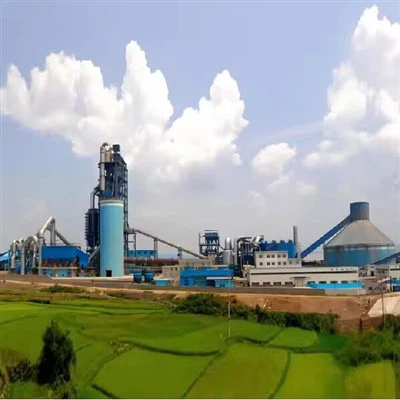
An AGICO cement grinding unit starts with delivered clinker. Feeders weigh clinker, gypsum and the additions specified for each grade, and the finish mill brings the blend to the required fineness. Separate silos hold the finished grades for bagging and tanker loading. The plant can keep grinding between loading windows when it has enough spare silo capacity.
Product Advantages
Separate Control of Feed Materials
AGICO's separate metering points let operators adjust gypsum and mineral additions to suit each cement grade.
Fineness Control Through Classification
The separator in AGICO's closed circuits returns coarse particles for further grinding while sending the fine product onward to storage.
Storage Sized for Dispatch
AGICO's silo arrangement allows grinding to continue between truck loading periods and keeps different cement grades in separate storage.
Dust Collection at Transfer Points
AGICO's layout incorporates dust collection at selected transfer points, with enclosed conveying where the route and material call for it.
Working Process

Material Flow and Coarse Return
Weigh and Feed
Clinker, gypsum and the mineral additions specified for each cement grade are stored separately. Weigh feeders meter each material at its set rate, and the combined feed is conveyed to the finish mill.
Grind and Classify
The finish mill reduces the feed to a fine powder. The separator sends coarse particles back to the mill and passes the fine fraction onward. The bag filter recovers fine cement carried by the circuit air.
Store and Dispatch
Finished cement is conveyed to the silo assigned to its grade. The silo buffers the mill's output so bagging and bulk loading can follow the truck schedule.
Plant Configuration
Ball Mill and Vertical Roller Mill Circuits

Equipment Zones and Interfaces
Start at the receiving end. Delivery frequency sets the buffer volume, and dosing accuracy matters when the recipe changes. On the discharge side, allow separate storage for each grade and size the packing and bulk loading routes for the busiest shift.
Compare the Grinding Circuits
In a closed ball-mill circuit, the external separator controls what leaves the circuit and returns coarse material. A vertical roller mill classifies within the casing and can use hot gas for drying. Before choosing a route, compare how each circuit handles the actual clinker blend and the finest grade in the production plan.
Plant Applications

Standalone and Compact Regional Plants
Locating a standalone clinker grinding plant near customers shifts the long-haul leg to clinker deliveries. Size the receiving buffer for the gaps between shipments and the finished cement silos for peak dispatch. A mini cement grinding plant can start with one loading route and leave room for another as local demand grows.
Added Finish-Grinding Capacity
An additional clinker grinding unit can take its feed from an existing clinker store. Walk the proposed conveyor route before laying out the mill. Identify where the new circuit will enter the cement silo system, and schedule each connection around the shortest available shutdown.

Hot Tags: cement grinding plant, China cement grinding plant manufacturers, factory, ball mill cement machine, cement bag filling machine, cement factory working process, cement product manufacturing process, manufacturing of cement wet process, steps in cement production
Technical Parameters
Vertical Roller Mill Options
Start with the tonnes of finished cement needed per productive mill hour. The table gives the main mill ratings for shortlisting a size before the feed blend and drying duty are assessed.
| Model | Table dia. (mm) | Rollers | Power (kW) | Capacity (t/h) |
|---|---|---|---|---|
| AGI30.31 | 3,000 | 3 | 1,250 | 55–60 |
| AGI32.31 | 3,200 | 3 | 1,600 | 65–80 |
| AGI35.41 | 3,500 | 4 | 1,800 | 85–100 |
| AGI40.41 | 4,000 | 4 | 2,500 | 115–125 |
| AGI43.41 | 4,300 | 4 | 3,000 | 135–145 |
| AGI46.41 | 4,600 | 4 | 3,350 | 150–160 |
| AGI48.41 | 4,800 | 4 | 3,350 | 170–180 |
| AGI50.41 | 5,000 | 4 | 3,900 | 190–200 |
| AGI53.41 | 5,300 | 4 | 4,600 | 210–230 |
| AGI56.61 | 5,600 | 6 | 5,300 | 235–250 |
For a proposal, send the blend for each cement grade, the fineness you sell to and the hours the mill can run. Include clinker test results, moisture at intake, a site plan and expected loading peaks for bags and bulk trucks. AGICO uses these inputs to size the mill, storage and dispatch equipment for the site.
Request a Grinding Plant Proposal
FAQ
What should I specify for a mini cement grinding plant?
Give AGICO your expected monthly sales, net grinding hours and clinker delivery schedule. These figures help size the mill and estimate how much clinker and finished cement the site needs to hold between deliveries and dispatches.
Can AGICO quote a circuit that keeps my existing ball mill?
Share the mill dimensions, installed drive power, separator details and recent throughput at your target fineness. AGICO can use these to assess whether the mill can serve in a revised circuit and identify which conveying and dust collection equipment may need changes.
What information helps AGICO compare grinding power demand?
Send clinker grindability data, the cement recipe, feed moisture and the target fineness for each grade. Ask AGICO to compare the circuits at the same production rate and on the same power boundary, including separator, fan and conveying loads.
What drawings help with installation planning?
Send AGICO a site plan with building clearances, existing foundations, truck access and cable routes. For an operating plant, mark the points where the new circuit will connect to existing conveyors, silos or utilities so the tie-in can be planned around production.