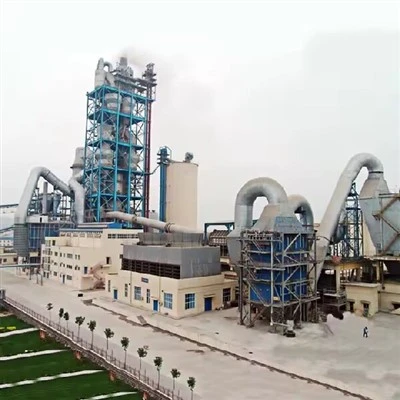
The cement industry has long been a vital source of funding for the building of national infrastructure, even in the face of modern industry's explosive growth. Portland cement is a unique building material that can successfully withstand the deterioration of a variety of chemical and natural settings. Because of this feature, it is useful in unique building situations like submerged concrete pouring and underwater engineering. An increasing number of investors are starting to take notice of the contemporary development potential concealed in this conventional business as a result of the ongoing expansion of big engineering projects and new urbanization construction.
In addition to having adequate financial resources to fund the construction of a contemporary cement plant, particularly a Portland cement production line, investors must also have a thorough understanding of the market dynamics and industry cost structure. The cost structure of constructing a Portland cement factory will be thoroughly examined in the following, which is based on pertinent facts and the state of the industry.
Costs Overview
The costs of a Portland cement plant involve multiple aspects, including raw material costs, energy consumption, labor costs, equipment maintenance and environmental compliance expenses, etc. The cost varies with different production scales. The following is a cost overview of a 1000tpd Portland cement production line as an example.
A Portland cement factory with a normal production capacity of 1,000 TPD requires a comparatively substantial initial total investment, mostly between 100 million and 180 million yuan (about 13.78 million to 24.8 million US dollars at the current exchange rate). The following table provides information on the primary cost composition, percentage, and approximate amount:
| Cost Category | Range (RMB) | Range (USD) | Proportion | Remark |
| Equipment Procurement | 60–100 million | 8.26 - 13.78 million | 55%-65% | Such as rotary kilns, classifiers, ball mills and dust removal systems. |
| Land and Site Construction | 6–15 million | 0.826 - 2.067 million | 10%-15% | It varies according to different regions |
| Environmental and Approval | 5–10 million | 0.689 - 1.378 million | 5%-8% | With increasingly strict environmental protection policies, investment in waste gas and wastewater treatment equipment is the key to ensuring the compliant operation of factories |
| Other costs | 20–40 million | 2.756 - 5.512 million | 15%-20% | This includes raw material reserves, labor costs, water and electricity fees, equipment maintenance and market promotion, etc |
Notes:The above data is for reference only. The actual figures may vary due to equipment selection, automation level, regional policies and land prices.
Equipment Investment
The ball mill and rotary kiln are the main pieces of equipment in the cement manufacturing line, and they frequently represent the great bulk of the equipment cost. Their performance has a significant impact on the production line's overall energy consumption and operational efficiency in addition to directly determining the final cement product's quality and production scale. The calcination and grinding systems are crucial, particularly in the Portland cement process. As a result, the scientific matching and selection of ball mills and rotary kilns is crucial for increasing production efficiency and attaining steady, long-term profitability, in addition to effectively controlling the initial expenditure.
-
Rotary Kiln
The rotary kiln is one of the most expensive pieces of machinery in the project since it is the largest and most technologically sophisticated piece of equipment. For a 1000 TPD manufacturing line, the overall cost of a rotary kiln system (which normally includes a preheating and pre-decomposition system) is typically between 25 million and 40 million yuan, or roughly 3.45 million to 5.5 million US dollars.
The price fluctuations mainly depend on the size specifications of the equipment, the selected materials (such as special steel), the configuration grade of refractory materials, the advancement of the drive system, and most importantly, its thermal efficiency and environmental protection design.
-
Ball Mill
With its electricity use making up over one-third of the factory's overall power consumption, the ball mill is a significant power user on the production line. Second only to the rotary kiln in terms of key expenses is its investment cost. A big ball mill that satisfies the supporting needs of a 1000 TPD production line will cost between 10 million to 18 million yuan (roughly 1.38 million to 2.48 million US dollars) to purchase and install, including the driving system and the associated powder separator.
It is important to note that many contemporary enterprises now use vertical roller mills for the grinding of raw materials. Compared to conventional ball mills, vertical mills use 30% to 40% less power and generate less noise. However, compared to ball mills of the same capacity, the initial investment in the machinery itself is often 10% to 20% greater.
AGICO offers a variety of rotary kilns and ball mills. Welcome to contact us for detailed information.

Cement Rotary Kiln
This is a slowly rotating steel cylinder lined with refractory bricks inside. The raw materials are heated in the kiln by a flame as high as 1450°C, and undergo a series of processes including drying, preheating, decomposition, exothermic reaction and cooling, eventually generating cement clinker.

Cement Ball Mill
used for clinker grinding. There are several steel balls within the ball mill. The steel balls strike and grind the materials as a result of the cylinder's revolution. Rollers are pressed onto a revolving grinding disc in a vertical mill to smash materials.
Land Cost

The main investment ties in cement plant projects are land and infrastructure. Consider industrial land in China's third-tier cities. Each mu of land costs between 300,000 and 500,000 yuan (about 41,000 and 69,000 US dollars), and 20 to 30 mu of continuous plots are typically required. Just the cost of the land is between 6 and 15 million yuan, or around 830,000 and 2.07 million US dollars.
3 to 5 million yuan (roughly 410,000 to 690,000 US dollars) is still needed for the factory area's infrastructure, which includes building factory buildings, hardening roads, connecting to the power grid, providing water and drainage, installing compressed air pipelines, office buildings, warehouses, and other facilities. Geological characteristics, land nature, and regional legislation all have a big impact on the final cost. To limit the entire cost and potential dangers, it is advised to perform thorough geological exploration, compliance evaluation, and economic comparison prior to site selection.
Additional Inputs
-
Environmental Protection And Qualification Application Investment
For the cement industry to operate compliantly and achieve sustainable development, environmental protection and qualifying investment are essential components. Businesses must give environmental evaluation and approval, as well as pollution control facilities, top priority in their early planning given the contemporary climate of ever-tightening environmental protection regulations. This portion of the investment, which typically makes up 5% to 8% of the overall project investment, primarily consists of the following elements:
First and foremost, the environmental impact assessment report must be prepared and approved before the project can begin. To get the construction permission, a thorough environmental evaluation must be finished in compliance with the local ecological and environmental authorities' regulations. Second, to ensure ultra-low emissions of particulate matter and nitrogen oxides and near-zero wastewater discharge, it is necessary to configure effective environmental protection treatment facilities, such as bag filters, denitration devices (SNCR/SCR), and wastewater recycling treatment systems, in accordance with the most recent national environmental protection standards.
-
Human Resources And Operational Input
Human input has a significant impact on cost control and production continuity in the operation of contemporary cement plants.
Human resources are still an essential input, even if automation technology has greatly decreased the need for human labor. To effectively accomplish essential responsibilities like central control room operation, on-site equipment inspection, and product quality control, a medium-sized production line using a DCS distributed control system often only needs 10 to 15 personnel per shift. Modern automated production lines can save about 30% on labor costs when compared to older manufacturing lines.
-
Daily maintenance cost
For cement factories to produce efficiently, equipment stability is essential, and maintenance expenses often make up 5% to 10% of overall production costs.
Initially, it is necessary to do routine maintenance, which includes lubricating the equipment and replacing worn elements like the rotary kiln's kiln lining, the mill's lining plates, and the grinding media. The second is scheduled maintenance, which involves scheduling regular kiln shutdowns according to working hours in order to undertake performance recovery and preventive maintenance. In addition, it is required to adequately set up the inventory of spare parts and components, and reserve core components for key equipment to reduce the downtime losses caused by sudden failures to the greatest extent.

One-stop cement production supplier in China
If you are considering building a Portland CEMENT plant, welcome to consult AGICO CEMENT. We are a professional supplier of cement equipment and cement production lines, with over 20 years of industry experience and a scientific and professional technical service team. We have successfully delivered hundreds of EPC projects and are highly praised by global customers. Welcome to contact us for the latest information.