


42.5 cement, a most widely used general purpose cement in global construction industry.
According to the EN 197-1:2011 standard, 42.5 cement is a type of portland cement with a strength grade of 42.5 MPa, it means under the standard curing conditions for 28 days, Its strength must reach 42.5 MPa. This strength grade is the core grade in the global cement classification system and represents the best balance between strength, durability and economy.
AGICO Cement is a leading cement equipment and cement production line project supplier from China.In this article, we will show you the most professional konwledge and informantion about 42.5 cement. If you are a fresh man in cement industry or you want to get better cement manufacturing equipment, please contact us.
CORE TECHNOLOGY SPECIFICATION
The EN 197-1 further divides the 42.5 strength grade into two types-- N(normal)and R(rapid). They are the most important classification in the international market.
| TYPE | 2 DAYS STRENGTH | 28 DAYS STRENGTH | CORE CHARACTERISTICS |
| 42.5N | ≥10.0 MPa | ≥42.5 MPa,≤62.5 MPa | normal strenght development |
| 42.5R | ≥20.0 MPa | ≥42.5 MPa,≤62.5 MPa | early strength is high, 2 days strength is twice than N type |
Notes: the 42.5N cement and 42.5R cement '28 days strength are exactly same, their only difference is the early strength development, After 2 days standard curing, the strength of R is twice as much as N.Type 42.5R adjusts clinker composition and grinding fineness to achieve faster strength growth, it suitable for projects requiring rapid demoulding or early loading.
| Test Item | EN 197-1 Requirement | Test Standard | Technical Significance |
| Initial Setting Time | ≥ 60 minutes | EN 196-3 | Ensures workability for transportation and placement |
| Final Setting Time | No specified limit, usually ≤ 10 hours | Ensures construction progress | |
| Soundness (Le Chatelier) | ≤ 10 mm | Ensures volume stability | |
| Blaine Specific Surface Area | No specified limit, usually ≥ 3000 cm²/g | EN 196-6 |
Indicates grinding fineness |
| Residue on 80 μm Sieve | No specified limit, usually < 15% | Indicates coarse particle content |
According to the European standard BS EN 1992-1-1 (Eurocode 2), cement is classified into three types based on its early strength development rate, which has a important impact on the concrete structures.
| Type | Cement Types | Strength Development Coefficient (s) | Application Scenarios |
| Class R (Rapid Early Strength) | 42.5R, 52.5N, 52.5R | 0.20 | Require rapid formwork removal and early loading application |
| Class N (Normal Early Strength) | 32.5R, 42.5N | 0.25 | Ordinary building structures |
| Class S (Slow Early Strength) | 32.5N | 0.38 | Mass concrete, special engineering applications |
Notes: Strength Development Coefficient (s): A parameter used in Eurocode 2 to calculate the compressive strength of concrete at different ages, based on the formula.

| Standard System | Strength Grade | Early Strength Requirement | 28-Day Strength Requirement |
| China GB175 | 42.5 | 3-day ≥ 17 MPa | ≥ 42.5 MPa |
| China GB175 | 42.5R | 3-day ≥ 22 MPa | ≥ 42.5 MPa |
| Europe EN 197-1 | 42.5N | 2-day ≥ 10 MPa | ≥ 42.5 MPa, ≤ 62.5 MPa |
| Europe EN 197-1 | 42.5R | 2-day ≥ 20 MPa | ≥ 42.5 MPa, ≤ 62.5 MPa |

One-stop cement production supplier in China
We are a professional supplier of cement equipment and cement production lines, with over 20 years of industry experience and a professional technical service team. If you want to get more information about cement manufacturing, welcome to contact us .
MAIN ADVANTAGES AND APPLICATION AREA
Advantages
We offer a variety of transmission components
High Strength Grade
The strength of 42.5 cement can be controlled within 48-52 MPa. The 42.5N/R cement meets the requirements for both normal and rapid construction. Its later strength continues to increase, ensuring the long-term safety of the structure.
High Durability
It has the characteristics of compact structure, small pores, volume stability,Strong frost resistance.it is especially suitabe for bad environments and can improve the stability of buildings,
Wide Adaptability
42.5 cement has a wide application range,it can be used to mix concrete of different strength grades. different 42.5 cement can meet various of structural requirements, such as producing prefabricated components, laying roads and using in sewage treatment buildings.
Environmentally Friendly
42.5 cement can greatly reduce energy consumption and reduce carbon emissions. Using mixed 42.5 cement material can decrease about 0.8 tons of CO ₂ emissions, it can not only save fuel power, and realize the industrial waste utilization.
application
Lorem ipsum dolor sit, amet consectetur adipisicing elit.


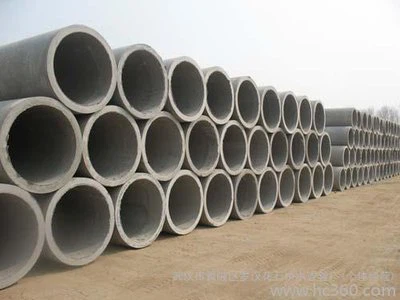
42.5 cement is widely used in various fields, including construction projects, infrastructure, specialized engineering, and concrete products.
In construction projects, 42.5 cement is the most widely used basic material. The concrete prepared with it can meet the strength requirements for different building parts. because of its fast early strength development and suitable setting time, prefabricated components such as stairs, wall panels, and pipe piles can be removed from the mold quickly, ensuring stable forming quality. For the prestressed concrete structure, it can provide enough strength reserve, satisfies the requirement of the strength of the reinforced when tensioning. Using 42.5 cement can effectively improve the efficiency and stability of construction, and also save material costs.
42.5 cement also can be used in Infrastructure area, the bridges and tunnels built with it are not only strong and durable, but also can bear high strength weight. It is also wear-resistant and not easy to shrink, so it is often used in the construction of roads.
HOW TO MANUFACTURE CEMENT
42.5 cemnet production line
The cement production line mainly include these steps: limestone crushing, raw material grinding, homogenization and pre-treatment, clinker calcination, cooling, cement grinding, product packing and transport.
Firstly, raw material include limestone, clay, iron ore will be crushed into small pieces by the crushers. Then the raw meal will be sent into ball mill machine for further grinding. When the raw material is ground to a suitable particle size, the raw material will be homogenized and preheated. Clinker calcination is the most important link in cement production, cement raw materials are calcined into cement clinker at a high temperature about 1450 °C in a rotary kiln. When the cement clinker cools down, it will be further finely ground. evently, the cement products can be packaged and transported all over the world.


Successful Cases
AGICO Cement is a leading supplier of cement production solutions. We have over 20 years of experience in the cement industry. We can offer you the most professional one-stop cement production projects and cement production equipment. We also provide equipment spare parts. We have many successful cases globally.


Frequently Asked Questions
Lorem ipsum dolor sit amet,consectetur.
How to prove to customer that products comply with European standards?
+
-
We can provide test reports issued by recognized laboratories, indicating that the testing basis is the EN 196-1/2/3 series standards and comparing them with the requirements of EN 197-1. For the EU market, the CE mark is a necessary condition.
What should we do if the American market does not accept the 42.5 cement description?
+
-
We can use the expression "equivalent to ASTM C150 Type I/II, with a 28-day strength reaching 42.5 MPa", and provide the ASTM C109 mortar strength test data.
Does China not have 42.5N classification?
+
-
According to the Chinese standard (GB175), there are only two grades: 42.5 and 42.5R. The 3-day strength requirement (≥17 MPa) of 42.5 cement in the Chinese standard is between the European 42.5N (≥10 MPa for 2 days) and 42.5R (≥20 MPa for 2 days).


